

I’m Raghav Dua. Since 2019, I’ve helped 100+ businesses improve rankings, generate leads, and grow revenue through SEO, PPC, website development, and digital marketing. A good portion of those businesses are dental clinics, and the patterns I’ve seen repeat themselves enough that I wanted to put them all in one place.
This guide covers everything a dentist needs to know about getting more patients online: what works, what doesn’t, what it costs, and what to do first.
What Does “Getting More Patients Online” Actually Mean?
Before we get into tactics, let’s define the outcome. Getting more patients online means:
- People searching “dentist near me” or “teeth whitening in [city]” find your clinic
- They visit your website and trust what they see
- They book an appointment without calling first (or they call because your listing gave them confidence)
Every strategy in this article ties back to those 3 steps. If a tactic doesn’t move one of them, it’s not worth your time.
Why Online Visibility Matters More Than It Did 5 Years Ago
In 2026, roughly 77% of patients search online before booking a healthcare appointment. For dentists, the local search behavior is even more concentrated: most people search within a 5–10 km radius, check Google reviews, look at a few photos, and decide within minutes.
The dentist who wins that search wins the patient.
What’s changed is the competition. In 2019, a basic Google Business Profile and a serviceable website were enough to rank in most small cities. Now, even smaller markets have 4–6 clinics running active SEO campaigns, Google Ads, and social media. If you’re not doing the same, you’re losing appointments to someone who is.
I’ve seen many dentists struggle with this not because they lack skills, but because they’re running a full practice and have no time to learn digital marketing. That’s the gap this article is meant to close.
The Core Benefits of Digital Marketing for Dentists
Before the strategy, here’s the return you can realistically expect when dental marketing is done well:
More appointment bookings. An optimized Google Business Profile alone can generate 30–60 new patient inquiries per month in a mid-size city. Combine that with SEO and a fast website, and the number goes higher.
Lower acquisition costs over time. Google Ads can get expensive, but organic SEO compounds. A clinic that ranks organically for “dental implants in [city]” gets free traffic indefinitely once it earns that position.
Better patient quality. Patients who find you through specific keyword searches (implants, Invisalign, pediatric dentistry) have higher intent and higher average treatment value than walk-ins or referrals from general searches.
Control over your reputation. Online reviews on Google and Practo directly affect how many people click your listing. A proactive review strategy is now a core part of dental marketing.
Step-by-Step: How to Build Your Online Patient Acquisition System
Step 1: Claim and Optimize Your Google Business Profile
If you do nothing else, do this.
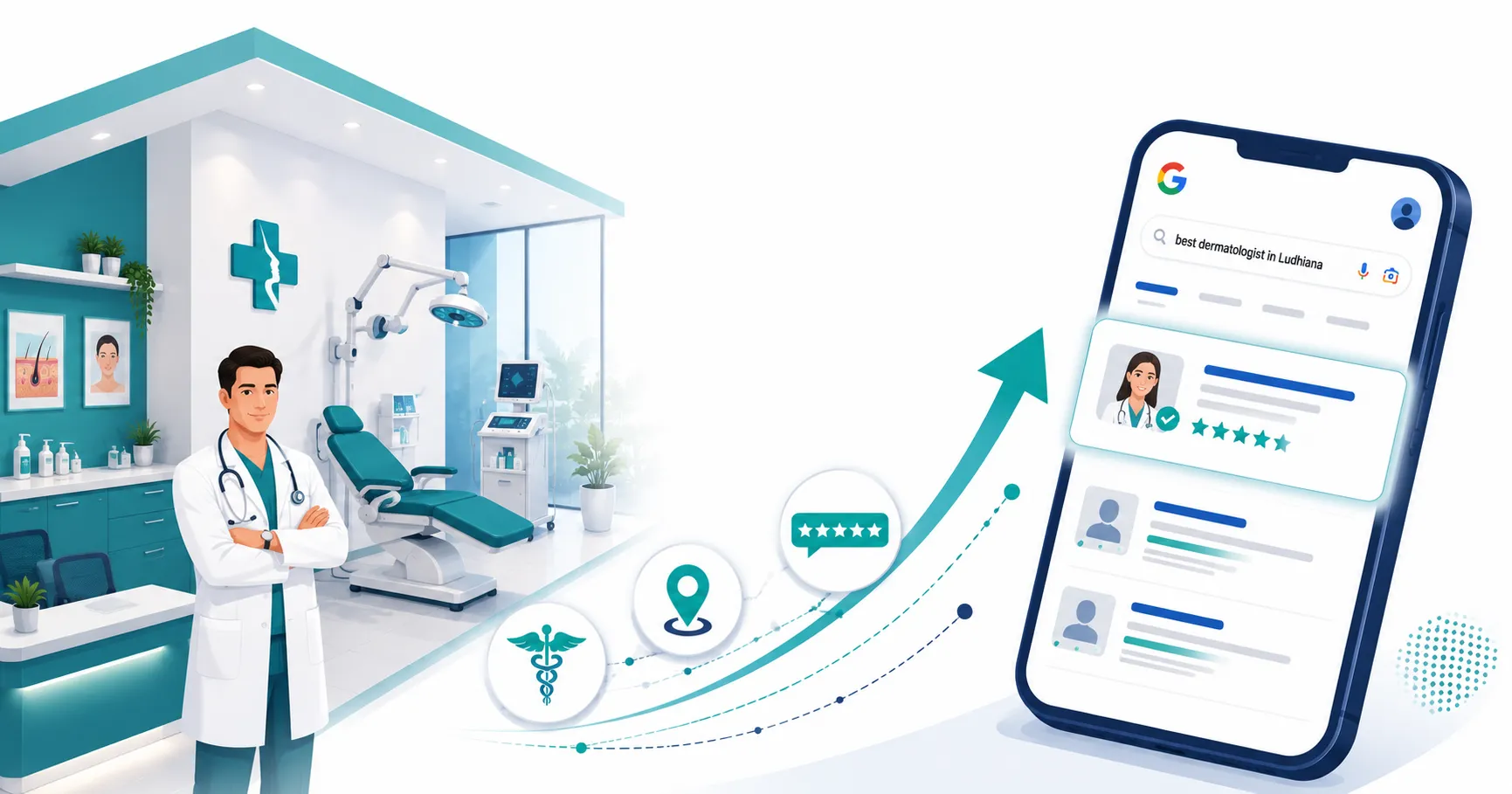
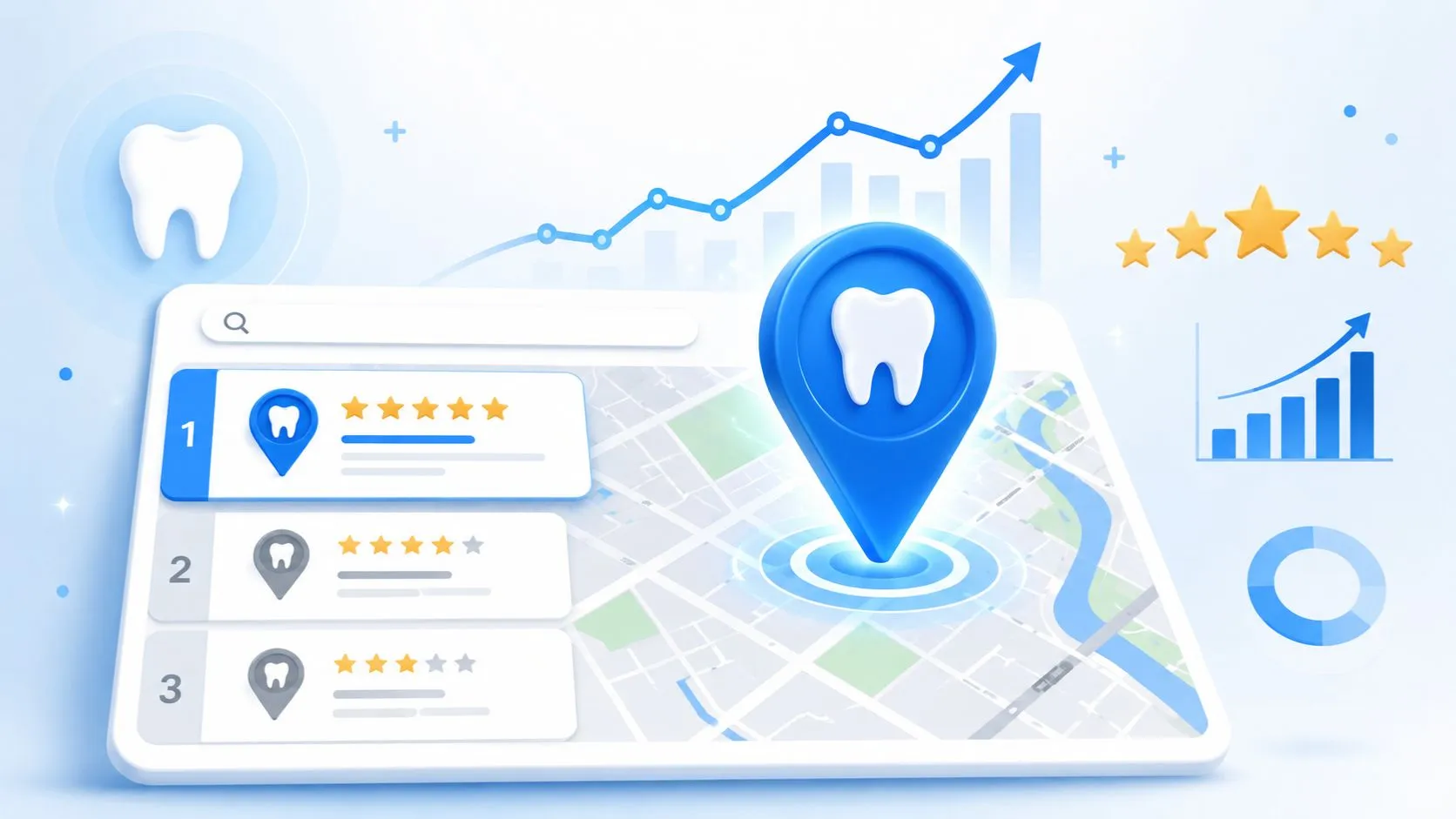
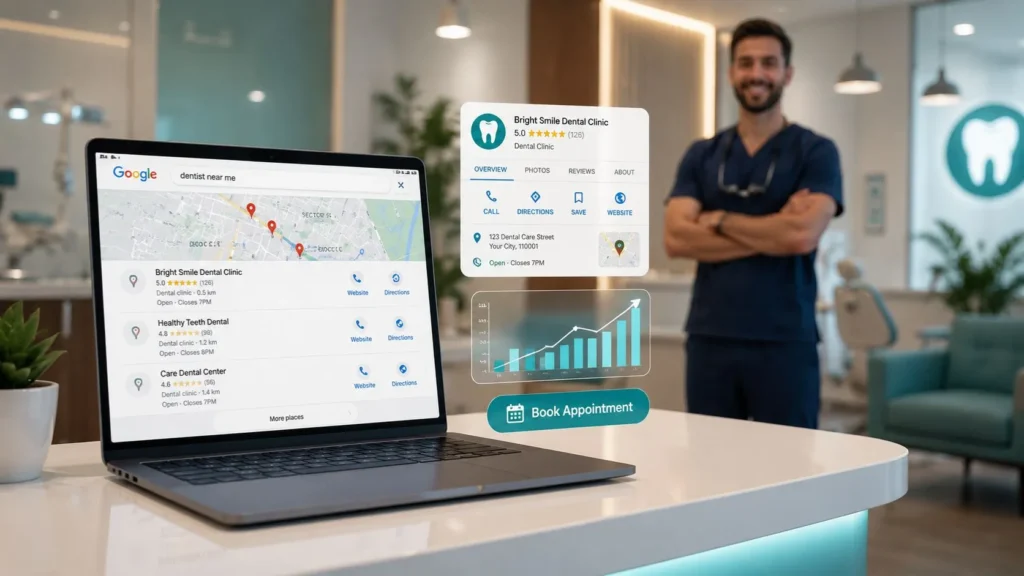
Your Google Business Profile (GBP) is what shows up in Google Maps and the local 3-pack when someone searches “dentist near me.” It’s the first thing most patients see, and it’s free.
What to complete:
- Business name (exact match to your signboard and website)
- Address, phone number, hours (must match your website exactly)
- Primary category: Dentist. Add secondary categories like Orthodontist or Cosmetic Dentist if relevant
- 20+ photos of your clinic interior, team, equipment
- Services list with descriptions and prices where possible
- Book an appointment button linked to your online booking system
What most clinics skip: the Q&A section and weekly Google Posts. Both signal activity to Google’s algorithm and help you appear in conversational searches.
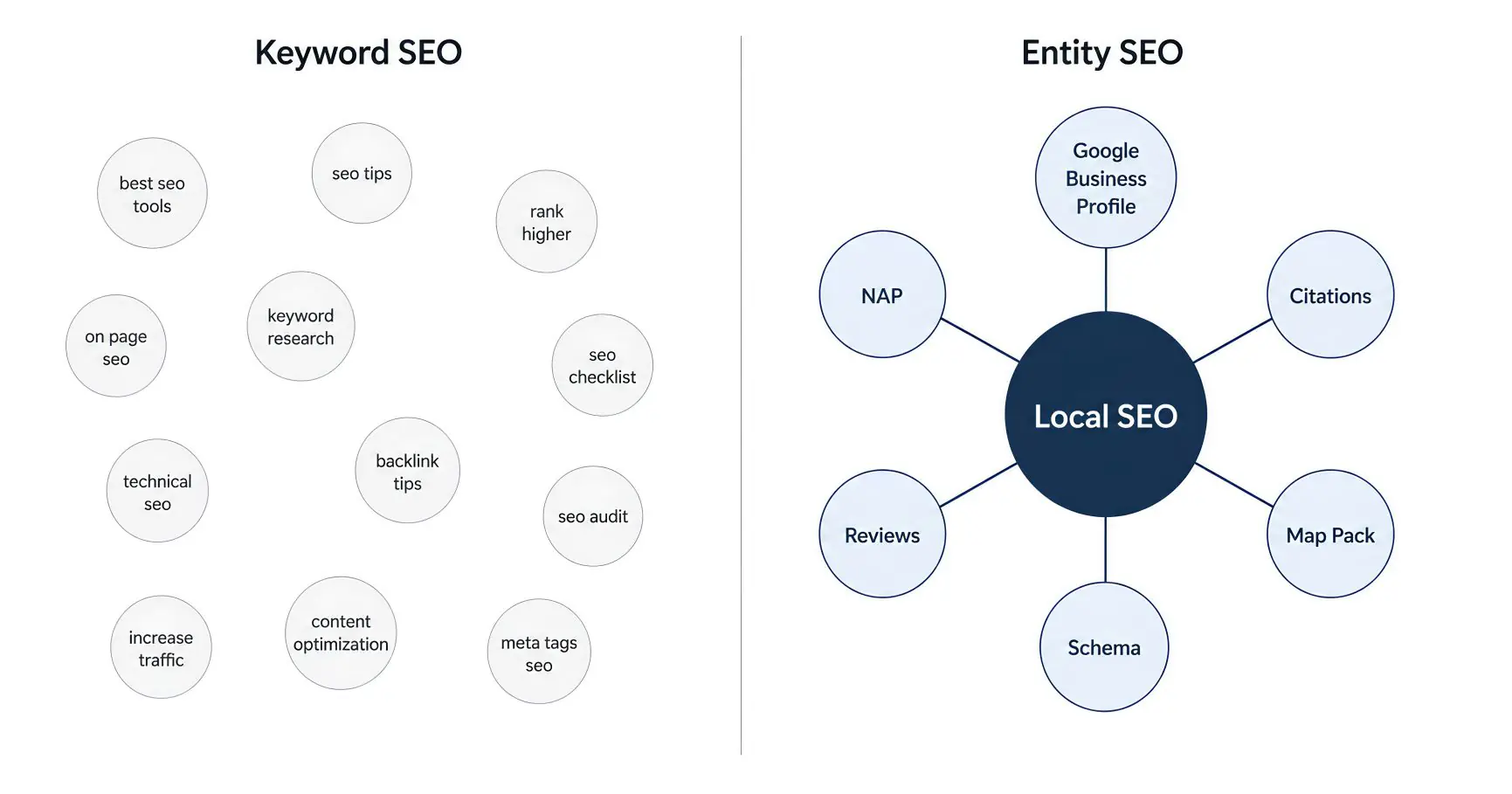
During SEO audits, one of the first things I check is whether the GBP has consistent NAP (Name, Address, Phone) across all directories. A mismatch between your GBP and your website is one of the most common reasons a clinic doesn’t show up in the top 3 map results.
Google Maps ranking depends on 3 factors: relevance (does your profile match the search?), distance (how close is the searcher?), and prominence (how many reviews and links do you have?). You can influence all 3 with the right setup.
Step 2: Build a Website That Converts
A dental website has 2 jobs: rank in search and convert visitors into bookings. Most clinic websites only attempt one, and do it poorly.
The technical requirements:
- Load in under 3 seconds on mobile
- HTTPS enabled
- No broken links or crawl errors
- Structured data markup (LocalBusiness schema) so Google understands your location and services
The content requirements:
- A homepage that clearly states what you do, where you are, and who you serve
- Individual service pages for every treatment you offer (implants, Invisalign, whitening, pediatric, etc.)
- A dedicated contact/booking page
- An About page with real photos of your team, not stock images
What converts: clear CTAs, visible phone numbers, online booking widgets, and patient photos/testimonials placed near the booking form.
One common issue I often notice with dental websites is the use of stock photography. Patients can tell. A real photo of your waiting room or your front desk team builds more trust than any generic “smiling patient” image.
| Feature | Impact on Conversions |
|---|---|
| Mobile-optimized design | High |
| Online booking widget | High |
| Real team photos | Medium-High |
| Page load under 3 seconds | High |
| Visible phone number on every page | Medium |
| Patient testimonials near CTA | Medium |
| Video tour of clinic | Medium |
| Stock photography only | Negative |
| No HTTPS | Very negative |
Step 3: Run Local SEO for Dentists
Local SEO is the process of making your clinic appear in geographically relevant searches. “Dentist in Ludhiana,” “best orthodontist in [neighborhood],” “dental implants cost [city]” these are the searches you want to own.
The key components:
Keyword research. Identify the terms patients actually search. Tools like Google Search Console (free), Ahrefs, or Semrush show you search volume and competition. For most dental clinics, high-value terms include:
- [service] + [city]: “teeth whitening Delhi,” “dental implants Chandigarh”
- “dentist near me” variations
- Cost/pricing searches: “dental implant cost in [city]”
- Symptom searches: “tooth pain relief,” “broken tooth what to do”
On-page SEO. Each service page should target 1 primary keyword. The page title, H1, meta description, and first 100 words should include that keyword naturally. Don’t stuff it. Write for the patient first.
Citations and directory listings. List your clinic on Practo, JustDial, Sulekha, HealthGrades (for international markets), and local business directories. Consistent NAP across all these directories tells Google your business is legitimate and established.
Content strategy. A blog that answers patient questions earns long-tail search traffic and builds topical authority. Posts like “How Long Do Dental Implants Last?” or “What Is the Difference Between Invisalign and Braces?” attract high-intent readers who are actively researching treatment.
In my experience working with dental clinics, the ones that publish 2–4 blog posts per month and link internally between their service pages consistently outrank competitors who have stronger homepage authority but thinner content.
Step 4: Run Google Ads for Immediate Lead Flow
SEO takes 3–6 months to show results. Google Ads for dentists can generate leads within 48 hours of going live.
The key is targeting correctly. Broad dental keywords like “dentist” are expensive and attract bargain-hunters. Specific keywords like “dental implants consultation [city]” or “emergency dentist [neighborhood]” attract patients with high intent and higher treatment value.
What a well-run dental Google Ads campaign looks like:
- Search campaigns targeting service + location keywords
- Call extensions so patients can call directly from the ad
- Location targeting set to a 10–15 km radius around your clinic
- Negative keywords to block irrelevant traffic (dental jobs, dental school, dental equipment suppliers)
- Landing pages specific to each ad group (implant ad goes to implant page, not homepage)
Budget guidance:
| Market Size | Recommended Monthly Budget | Expected Leads/Month |
|---|---|---|
| Small city (under 500k population) | ₹15,000–₹25,000 | 20–40 |
| Medium city (500k–2M) | ₹25,000–₹60,000 | 30–70 |
| Metro / high competition | ₹60,000–₹1,50,000 | 50–150 |
These are rough ranges. Actual CPC varies by keyword, quality score, and how well your landing page converts. A poorly designed landing page can double your cost per lead.
Step 5: Build and Manage Your Online Reputation
Reviews are the most influential factor in whether a patient picks your clinic over the one down the street. Google shows star ratings in local search results. A 4.8-star clinic with 120 reviews will get more clicks than a 4.2-star clinic with 12.
How to get more reviews consistently:
- Ask every patient after a positive appointment. A simple verbal ask works better than most software
- Send a follow-up WhatsApp or SMS with a direct link to your Google review page
- Train your front desk team to ask patients who comment positively during checkout
- Add a QR code at your reception desk linking to your review page
How to handle negative reviews: respond within 24 hours, acknowledge the concern without admitting fault (for legal reasons), and offer to resolve it offline. A professional, calm response to a 1-star review often reassures future patients more than the review itself harms you.
We’ve helped clinics go from 15 reviews to 200+ in under 6 months using this kind of systematic approach. The clinics that treat reputation management as an ongoing task (not a one-time fix) see the biggest difference in local rankings.
Step 6: Use Social Media for Awareness and Trust
Social media for dentists isn’t primarily a lead generation channel. It’s a trust channel. When a prospective patient looks you up on Instagram or Facebook before booking, what they see either builds confidence or doesn’t.
What works on dental social media:
- Before and after photos (with patient consent) for cosmetic cases
- Short videos showing your clinic, equipment, or explaining a procedure
- Staff introductions and behind-the-scenes content
- Patient testimonials (video especially)
- Educational posts answering common questions (“Do you really need to floss?”)
What doesn’t work: daily promotional posts, stock imagery, and generic “oral hygiene tips” that could come from any clinic in the country.
Instagram and YouTube have become particularly strong for cosmetic dentistry, orthodontics, and dental implant marketing. A single good Reel showing a smile transformation can reach thousands of people in your city at zero ad spend.
Step 7: Set Up Dental Lead Generation Infrastructure
Most clinics generate interest but lose patients in the follow-up gap. The phone rings while you’re with a patient. The inquiry form sits unread for 3 days. The patient books somewhere else.
The infrastructure you need:
- Online booking system (Practo, Calendly, or a custom integration with your practice management software)
- WhatsApp Business for quick responses to inquiries
- Auto-reply for missed calls and contact form submissions
- CRM or even a simple spreadsheet to track inquiry-to-appointment conversion rate
The fastest win I see for most clinics is adding a WhatsApp chat widget to their website. Patients who won’t call will often message. Response time under 1 hour makes a significant difference in conversion rate.
Common Mistakes Dentists Make with Online Marketing
1. Treating the website as a one-time project. Websites need to be updated as your services change, as Google’s algorithm updates, and as your competitor landscape shifts. A 5-year-old website is a liability.
2. Ignoring mobile experience. Over 70% of dental searches happen on mobile. If your site isn’t fast and easy to use on a phone, you’re losing most of your potential patients before they even read about your services.
3. Running Google Ads without conversion tracking. If you don’t know which keywords are generating bookings (not just clicks), you’re burning budget.
4. Asking for reviews once and forgetting. Review velocity matters. Clinics that consistently get new reviews rank higher in Maps than those with older, larger review counts.
5. Publishing thin service pages. A service page for “dental implants” that’s 200 words long can’t compete with a comprehensive page that answers every question a patient has about the procedure, cost, recovery, and candidacy.
6. No local landing pages for multi-location clinics. If you have 2 clinic locations, each needs its own page optimized for its specific neighborhood or city.
Comparison: DIY vs. Hiring a Dental Marketing Agency
| DIY | Dental Marketing Agency | |
|---|---|---|
| Upfront cost | Low | Medium-High |
| Time required | 10–20 hrs/week | 1–2 hrs/week (review/approval) |
| SEO expertise | Depends on owner | Specialist level |
| Google Ads management | Learning curve | Optimized from day 1 |
| Speed to results | Slow | Faster |
| Consistency | Depends on capacity | Systematic |
| Best for | Solo dentists, tight budget | Growing clinics, 2+ locations |
A digital marketing agency for dentists that specializes in the healthcare space will understand treatment types, patient psychology, compliance requirements (especially for before/after imagery), and the competitive dynamics of local dental markets. A generalist agency may not.
Tools and Resources
| Category | Tool | Cost |
|---|---|---|
| Local SEO tracking | BrightLocal | Paid |
| Keyword research | Google Search Console | Free |
| Website performance | Google PageSpeed Insights | Free |
| Google Ads | Google Ads platform | Pay per click |
| Review management | GatherUp, NiceJob | Paid |
| Social scheduling | Buffer, Meta Business Suite | Free tier available |
| Online booking | Practo, Zocdoc | Varies |
| Analytics | Google Analytics 4 | Free |
| Competitor research | Semrush, Ahrefs | Paid |
Cost and ROI of Dental Digital Marketing
Here’s a realistic cost breakdown for a single-location dental clinic targeting a medium-size Indian city:
| Service | Monthly Cost (INR) |
|---|---|
| SEO (on-page + content + link building) | ₹15,000–₹40,000 |
| Google Ads management + spend | ₹30,000–₹80,000 |
| Website maintenance | ₹3,000–₹8,000 |
| Social media management | ₹8,000–₹20,000 |
| Total range | ₹56,000–₹1,48,000/month |
What’s the return? A single dental implant case in India runs ₹35,000–₹1,50,000. One cosmetic case or Invisalign treatment covers a month of marketing spend. Clinics running well-optimized campaigns typically see 3–8x return on marketing investment within 6–12 months.
The ROI picture for dental advertising services is strong because treatment values are high and patients have multi-year lifetime value. A patient who finds you for a cleaning may return for whitening, a crown, and then Invisalign for their teenager.
Future Trends in Dental Marketing
AI-powered search and Google AI Overviews. Google’s AI summaries now appear above organic results for many health-related queries. To appear in them, your content needs to be comprehensive, authoritative, and structured with clear headings and direct answers. This article is structured that way intentionally.
Voice search and conversational queries. “Hey Google, find a pediatric dentist near me open on Saturdays” is how patients increasingly search. Optimize for natural language, not just keyword phrases.
Video content as a ranking signal. YouTube is the second largest search engine. Dentists with a YouTube channel covering procedures, costs, and FAQs have a meaningful advantage over those who don’t.
Zero-click searches and featured snippets. FAQ sections, cost tables, and structured step-by-step content are what Google pulls for featured snippets. The FAQ section below is designed with this in mind.
WhatsApp and messaging-first patient journeys. Especially in India and Southeast Asia, patients increasingly expect to book and communicate via WhatsApp rather than phone calls or email.
Case Perspective: What Changes When a Clinic Gets Marketing Right
We’ve helped clinics go from 8–10 new patient inquiries per month to 40–60 by making 4 changes: fixing their GBP, redesigning their website for mobile, adding a blog targeting 3–4 service-specific keywords, and running a small Google Ads campaign for their highest-margin service (implants).
None of this required a large budget. The first 2 months were slow. By month 4, the organic traffic was compounding.
The clinics that see the best results treat marketing as infrastructure, not an expense. They review their analytics monthly, update their service pages as Google’s algorithm shifts, and actively ask every satisfied patient for a review.
Frequently Asked Questions
Q1: How long does SEO take to work for a dental clinic? Typically 3–6 months to see meaningful organic ranking improvements, and 6–12 months to rank in the top 3 for competitive local keywords. Google Ads can generate leads within days of launch.
Q2: What is the most important thing a dentist can do online? Claim and optimize your Google Business Profile. It’s free, it’s where most patients find you, and most clinics have incomplete or outdated profiles.
Q3: How much should a dental clinic spend on digital marketing? A reasonable starting budget for a single-location clinic in a mid-size Indian city is ₹30,000–₹60,000 per month, covering SEO and Google Ads. Scale up as you see ROI.
Q4: Does social media actually bring in dental patients? Directly, it’s limited. But Instagram and Facebook build trust and show up in a prospect’s research process. Patients often check your social profiles after seeing your Google listing. Cosmetic dentistry and orthodontics see the most direct social media ROI.
Q5: What’s the difference between SEO and Google Ads for dentists? SEO builds free, lasting organic rankings over time. Google Ads generates paid traffic immediately but stops when you stop paying. The best strategy uses both: Ads for short-term lead flow, SEO for long-term cost reduction.
Q6: How do I get more Google reviews for my clinic? Ask every satisfied patient personally at checkout, then send a WhatsApp follow-up with a direct review link. Make it a front-desk habit rather than a campaign.
Q7: Should I build a new website or optimize my existing one? If your current site is under 3 years old, loads fast on mobile, and has clear CTAs, optimize it. If it’s slow, outdated, or missing service pages, a redesign is usually faster and more cost-effective than trying to fix a broken foundation.
Q8: What is local SEO for dentists, and is it different from regular SEO? Local SEO targets geographically specific searches (“dentist in [city]”) and includes Google Maps optimization, local citations, and location-specific content. It’s the most important SEO type for most dental clinics because patients search within a radius, not nationally.
Q9: Can I do dental marketing myself? Yes, especially for GBP optimization, review management, and basic social media. Google Ads and technical SEO have a steeper learning curve and a higher cost of mistakes, which is where hiring a dental marketing agency typically pays off.
Q10: How do I track whether my marketing is working? Set up Google Analytics 4 and Google Search Console (both free). Track: organic traffic, GBP clicks, call volume from ads, and your inquiry-to-appointment conversion rate. Without these numbers, you’re optimizing blind.
Q11: What is dental reputation management? The process of actively monitoring and improving your online reviews and ratings across Google, Practo, and other platforms. It includes getting new reviews, responding to all reviews (positive and negative), and addressing patient complaints before they become public.
Q12: Is dental patient acquisition through online channels reliable? It’s more reliable than most offline channels because search intent is high. Someone searching “dental implants [city]” is actively looking for a provider. The challenge is that it requires consistent maintenance; rankings and lead volume can drop if the work stops.
Final Thoughts
Getting more patients online isn’t a single tactic. It’s a system: a well-optimized Google Business Profile, a fast and trustworthy website, SEO that earns search visibility over time, Google Ads for immediate lead flow, and a reputation management habit that compounds your credibility.
The clinics that build this system outperform competitors who treat marketing as a one-time project or a last resort. They also spend less per patient acquired over time as their organic presence strengthens.
If you want to understand where your clinic specifically stands, the fastest starting point is a free audit: check your GBP completeness, run your homepage through Google PageSpeed Insights, and count how many patient reviews you’ve received in the last 90 days.
Those 3 data points tell most of the story.
About the Author
Raghav Dua is the Founder of Bring Brandon, a dental marketing agency helping clinics generate more appointments through SEO, Local SEO, Google Ads, website design, and lead generation. Since 2019, he has worked with 100+ businesses across industries to improve search rankings, drive qualified leads, and grow revenue through data-informed digital marketing.