

Search has a credibility problem, and Google knows it.
Anyone can publish 2,000 words on any topic in about four minutes now. A prompt, a paste, a publish button. The volume of new content online has gone up sharply, and a large share of it reads fine but says nothing a reader can act on. Google’s whole business depends on sorting the useful pages from the filler, so the company keeps tightening how it measures credibility.
That’s where E-E-A-T comes in.
At Bring Brandon, we audit a lot of websites every month, and the pattern is consistent. Sites that show who wrote the content, why that person knows the subject, and that the business behind the page is real tend to hold their rankings through core updates. Sites that hide all of that tend to slide. The March 2026 core update was one of the most volatile in Google’s history, and the pages that got hit hardest were almost always the ones with no named authors, no sources, and no clear ownership.
This guide covers what E-E-A-T is, why it carries more weight in 2026 than it did two years ago, and exactly how to build each signal on your own site. You’ll get implementation checklists, a full audit table, type-by-type advice for local, e-commerce, SaaS, healthcare, and finance sites, a 30-day plan, and answers to the questions clients ask us most. Everything here comes from work we do on real campaigns.
What is E-E-A-T?
E-E-A-T stands for Experience, Expertise, Authoritativeness, and Trustworthiness. Google added the second E (Experience) to its quality framework in December 2022, and the change matters more than it sounds.
The framework lives inside Google’s Search Quality Rater Guidelines, a public document Google gives to the thousands of human raters who assess sample search results. Those raters don’t change your rankings directly. Their scores train and validate Google’s automated systems, so the qualities they’re told to reward are the qualities the algorithm learns to favour. Reading that document tells you, in plain terms, what Google is trying to surface.
Here’s what each letter means in practice.
Experience asks whether the person or business creating the content has actually done the thing. A review of a hotel written by someone who stayed there beats one assembled from other reviews. A guide to fixing a boiler written by a plumber who fixes boilers beats one written by a generalist. Google wants evidence of first-hand involvement: original photos, specific details, the kind of observations you only get from being there.
experienceExpertise is about subject knowledge and skill. The author knows the field well enough to be right and to explain it clearly. For a medical page, that means real medical credentials. For a recipe, it means someone who actually cooks. Expertise and Experience overlap, but they’re not the same. You can have deep knowledge of a topic you’ve never personally lived through, and you can have lived through something without being an expert on it.
Authoritativeness is reputation. It’s whether other credible people and sites treat you as a go-to source. This shows up in links from respected publications, mentions across the web, citations in industry articles, and being the recognised name people associate with a topic.
Trustworthiness ties the other three together, and Google’s guidelines treat it as the most important of the four. A page can show experience and expertise and still fail on trust if the business hides its contact details, makes claims it can’t back up, or runs an insecure site. Trust covers honesty, accuracy, safety, and whether a user can rely on what the page tells them.
Google weighs E-E-A-T more heavily for what it calls YMYL pages: Your Money or Your Life topics like health, finance, legal advice, and safety. A wrong answer on those pages can hurt someone, so the bar is higher. For more on how Google frames all of this, the creating helpful content documentation on Google Search Central is the official starting point and spells out the self-assessment questions Google suggests you ask about your own pages.
Why E-E-A-T matters in 2026
Two years ago you could rank a thin page on a thin domain if you nailed the keywords. That window has mostly closed, for a few connected reasons.
AI content flooded the index. When publishing got cheap, the average page got less distinctive. Google responded by leaning harder on signals that are expensive to fake: a real author with a track record, links earned over years, a business with a verifiable identity. In our audits, the clients who invested in those signals before 2025 are the ones who kept their traffic when competitors who scaled thin content got cut.
AI Overviews changed what ranking even means. Google now answers many informational queries with an AI-generated summary at the top of the page, and it pulls those answers from sources it considers credible. If your content isn’t trusted, it doesn’t get cited, and the click goes to whoever did. The September 2025 update to Google’s rater guidelines added a whole section on evaluating these AI Overviews, which tells you how seriously Google is treating source quality here. Search Engine Land covered that revision in detail and it’s worth reading if you want the specifics on what changed.
Buyers got more cautious. People have learned to spot generic content, and they bounce from it. A founder we worked with rewrote a product page after three separate prospects asked, on sales calls, what the product actually did. The page had been written to sound impressive and said nothing concrete. Trust signals (real reviews, a named team, clear pricing) move conversion rates as much as they move rankings.
The practical takeaway: E-E-A-T affects three things at once. It affects whether you rank, whether AI search cites you, and whether the people who do land on your page believe you enough to buy. Microsoft’s Bing Webmaster Guidelines run on a similar logic under a different name, judging pages on authority, utility, and presentation, so this isn’t a Google-only concern. Optimising for credibility works across search engines.
Experience: showing first-hand knowledge
Experience is the easiest of the four to fake on the surface and the hardest to fake convincingly. Google is looking for proof you’ve actually done what you’re writing about.
The strongest experience signal is original detail that a researcher couldn’t produce. A case study with real numbers. A photo you took, not a stock image. A specific observation: “the form asked for billing details before showing the product, so 42% of users dropped at step two.” That sentence could only come from someone who watched the data.
When we rebuild a client’s blog, the first thing we add is proof of doing. If they’re a roofing company, we use photos from actual jobs, not stock shots of roofs. If they’re a software firm, we add screenshots from inside the product and short stories about how specific customers used it. The content reads completely differently, and Google’s systems can tell.
Customer stories carry a lot of weight here, and they’re underused. A named customer, a real problem, a specific result. That’s experience the reader can verify and the kind of content AI Overviews tend to pull from.
Implementation checklist:
- Add author bios that state the author’s hands-on background with the topic, not just a job title.
- Use original photos, screenshots, and video wherever possible.
- Include specific numbers from real work: dates, costs, percentages, timeframes.
- Publish case studies with named clients (with permission) and concrete outcomes.
- Add first-hand observations that a research-only writer couldn’t know.
Common mistakes: writing in vague generalities, using stock imagery on pages that claim hands-on knowledge, and stating outcomes with no specifics (“we helped a client grow”) instead of detail (“we cut their cost per lead from £80 to £34 in four months”). The fix is always the same. Replace the general claim with the specific fact behind it.
Expertise: demonstrating subject knowledge
Expertise is about being right and showing why you’re qualified to be right.
The clearest way to show expertise is a real author with relevant credentials, attached to the content with a proper bio and an author page. Google connects authors across the web, so a consistent author identity (same bio, same photo, links to their LinkedIn or professional profiles) helps establish that the person behind the content is a known quantity in their field.
Research-backed content is the other half. When you make a claim, support it with data, and cite the source. This is good for readers and it signals to Google that the content is grounded in something verifiable. We pull supporting data from primary sources where we can: original studies, government statistics, and the search engines’ own documentation rather than blogs summarising blogs.
For content audits, Semrush’s Site Audit flags pages with weak or missing author information and surfaces thin content that won’t pass an expertise check, which makes it a fast way to find the pages that need an expert’s name and review before anything else.
Implementation checklist:
- Attach a named author with relevant qualifications to every substantive page.
- Build full author pages that list credentials, experience, and other published work.
- Support claims with cited data from primary sources.
- Have a qualified person review and fact-check content before it goes live, especially on YMYL topics.
- Keep author identity consistent across your site and external profiles.
Example: a health clinic we audited had useful articles written by its doctors but published with no bylines at all. Anonymous. We added each doctor’s name, photo, qualifications, and a link to their professional registration. No new content, same words, but the pages now showed who stood behind the advice. That’s the difference between an article that reads as credible and one that reads as anonymous filler.
Authoritativeness: building recognition
Authority is the signal you can’t build in a week, which is exactly why it’s worth so much. It’s earned recognition from the wider web.
Quality backlinks are the backbone of authority, and the data is clear on this. Ahrefs studied close to a billion pages and found a consistent positive correlation between the number of websites linking to a page and the organic traffic it gets. In a separate study of 200,000 top-ranking pages across 10,000 keywords, Ahrefs found that most number-one pages keep earning new referring domains at a pace of roughly +5% to +14.5% per month. Authority keeps building. The pages that hold the top spot keep earning links over time.
The word that matters there is quality. A handful of links from respected, relevant sites does far more than hundreds from low-value directories. We’ve watched sites get hurt by buying cheap links, and cleaning that up is slower and more expensive than earning good links would have been.
Digital PR is how we build authority for most clients now. Original research, useful data, expert commentary that journalists and bloggers want to cite. When a respected publication links to you because you said something worth quoting, that link carries real weight and tends to attract more links on its own.
Brand mentions count even without a link. Google can recognise when your brand is discussed across the web, and a brand that gets talked about looks more authoritative than one that doesn’t. Thought leadership feeds this: when your people publish in industry outlets, speak at events, and get quoted, your name becomes one search engines associate with the topic.
Implementation checklist:
- Earn links from respected, relevant sites through original research and digital PR.
- Audit your existing backlink profile and disavow or clean up toxic links.
- Get your experts published and quoted in industry publications.
- Build out genuine brand presence so your name appears across the web, linked or not.
- Track referring domains over time instead of chasing one-off link spikes.
Example: a B2B client of ours published a small original survey of their industry, 200 responses, nothing fancy. Three trade publications picked it up and linked to it. Those three links did more for the domain’s authority than the previous year of guest posting, because they came from sites that genuinely matter in that niche. Moz’s work on domain authority is a useful reference for understanding why where a link comes from matters more than how many you have.
Trustworthiness: building user confidence
Google’s rater guidelines call trust the most important member of the E-E-A-T family, and it’s the one with the most concrete, fixable checklist items.
Start with the basics that any rater (or user) checks. HTTPS across the whole site, not just the checkout. Real, findable contact information: a physical address, a phone number, an email, not just a form. A clear privacy policy and terms. These sound obvious, and yet a surprising number of the sites we audit are missing at least one. A business that hides how to reach it reads as a business with something to hide.
Reviews and testimonials are trust signals when they’re verifiable. Real reviews on third-party platforms (Google Business Profile, Trustpilot, industry sites) carry more weight than anonymous quotes on your own homepage, because users can check them. BrightLocal’s annual Local Consumer Review Survey consistently finds that the large majority of consumers read online reviews before choosing a local business, which tells you these signals affect buyers directly, not only rankings.
Business credentials build trust on YMYL topics especially. Licenses, certifications, professional memberships, registration numbers. If you’re giving health or financial or legal information, show the qualifications that make you allowed to.
Implementation checklist:
- Serve the entire site over HTTPS.
- Publish complete contact details, including a real address where relevant.
- Add a clear privacy policy and terms of service.
- Display verifiable reviews and link to third-party review profiles.
- Show licenses, certifications, and credentials, especially on YMYL pages.
- Make pricing, claims, and policies honest and easy to find.
Example: an e-commerce store we worked with had decent products and poor conversion. Part of the problem was trust. No phone number, a returns policy buried three clicks deep, and reviews that lived only on the homepage with no way to verify them. We added a visible contact number, surfaced the returns policy on every product page, and connected the store to a third-party review platform. Conversions improved, and the pages held up better in the next core update too. Google’s Search Quality Rater Guidelines describe exactly this kind of assessment: raters are told to check whether a site gives users enough information to trust it before relying on what it says.
E-E-A-T audit checklist
Here’s the table we work through when we audit a site for E-E-A-T. Run your own site against it and fix the high-priority gaps first.
| Factor | What to check | Priority | SEO impact |
|---|---|---|---|
| Named authors | Every substantive page has a real, credited author | High | High |
| Author bios and pages | Bios list relevant credentials and experience | High | High |
| First-hand experience | Content shows original photos, data, or observations | High | High |
| HTTPS | Whole site served securely, no mixed content | High | High |
| Contact information | Address, phone, and email easy to find | High | Medium |
| Privacy policy and terms | Present, current, and linked site-wide | High | Medium |
| Reviews and ratings | Verifiable reviews on third-party platforms | High | Medium |
| Backlink quality | Links come from relevant, respected sites | High | High |
| Toxic links | Spammy or paid links identified and cleaned | Medium | High |
| Citations and sources | Claims supported with links to primary data | Medium | Medium |
| Fact-checking process | Qualified review before YMYL content publishes | High | High |
| Business credentials | Licenses and certifications shown where relevant | Medium | Medium |
| About page | Explains who runs the site and why they’re qualified | Medium | Medium |
| Brand presence | Brand mentioned and recognised across the web | Medium | Medium |
| Content accuracy | No outdated, wrong, or unsupported claims | High | High |
| Structured data | Author, organisation, and review schema in place | Medium | Medium |
| Site security | No malware, safe browsing status clean | High | High |
| Consistent NAP | Name, address, phone match across the web | Medium | Medium |
Most sites fail on a handful of these, not all of them. A free tool like Screaming Frog’s SEO Spider helps you crawl the whole site quickly to find missing author tags, broken HTTPS, and pages with no structured data, which covers several rows in one pass.
E-E-A-T for different website types
The framework is the same everywhere. Where you spend your effort changes by site type.
Local businesses
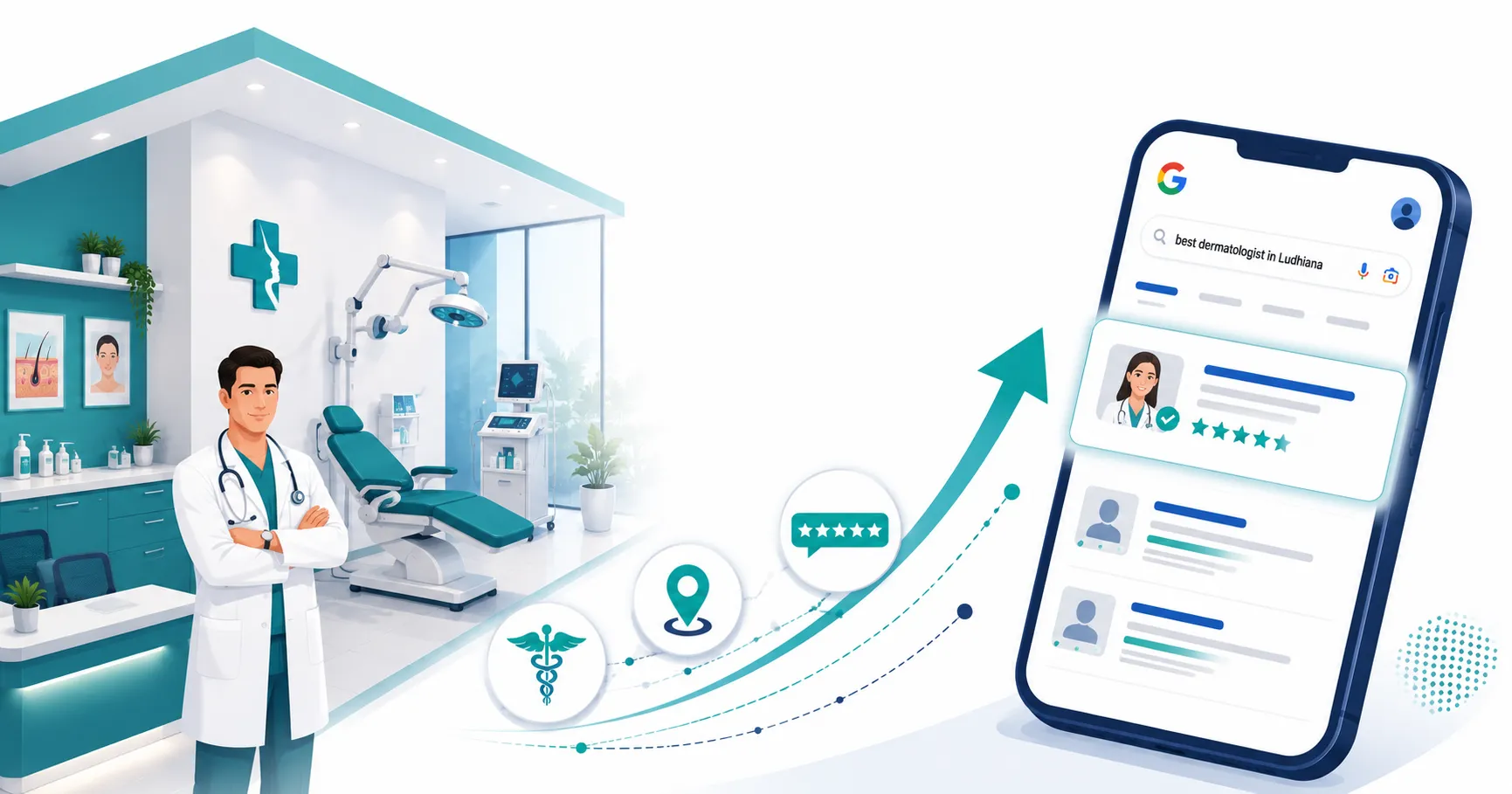
Trust and experience matter most. Get your Google Business Profile complete and verified, keep your name, address, and phone consistent everywhere they appear, and earn real reviews. Local customers check reviews before they call, so a strong, recent review profile does double duty for rankings and conversions. Photos of your actual premises and team add experience that chain competitors using stock imagery can’t match.
E-commerce stores
Trust signals drive both rankings and sales. Verifiable product reviews, clear shipping and returns policies, visible contact details, and secure checkout. Add genuine expertise to category and product pages through buying guides written by people who know the products. Thin product descriptions copied from the manufacturer are a common weak point we fix.
Service-based businesses
Authority and expertise carry these. Case studies with real results, detailed service pages that show you understand the work, and credentials that prove you’re qualified. A law firm, accountant, or agency should make its people’s qualifications obvious. Client testimonials with full names and companies (with permission) beat anonymous praise.
SaaS companies
Expertise and authority lead. Documentation, original research, and content written by people who actually build or use the product. SaaS audiences are technical and spot generic content instantly. Founder and team thought leadership builds authority fast in these niches, where the audience is small and reputation travels.
Healthcare websites
This is YMYL, so the bar is highest. Content needs real medical authorship and review, clear credentials, and citations to primary medical sources. Anonymous health advice is one of the riskiest things you can publish in 2026. Every page should make clear who wrote it, who reviewed it, and what qualifies them.
Finance websites
Also YMYL, also high stakes. Show regulatory credentials, name qualified authors, cite official sources, and keep figures current. Trust signals like security, transparency about who runs the site, and clear disclaimers matter as much as the content itself. Google scrutinises financial advice pages closely because a bad answer costs someone money.
For all six types, Google Search Console is where you watch the results. It shows which pages gain or lose impressions after you make changes, so you can tell whether your E-E-A-T work is moving anything.
Common E-E-A-T mistakes
These are the ones we see most, and how to fix each.
Anonymous content. Pages with no author, common on company blogs. Fix: credit a real person with a real bio on every substantive page.
Fake author profiles. Invented names, AI-generated headshots, fabricated credentials. This is worse than anonymous content because it’s deceptive, and Google is getting better at detecting it. Fix: use real people. If a topic needs an expert you don’t have, hire or quote one.
Thin content. Pages that exist to target a keyword and say nothing useful. Fix: consolidate or rewrite them with real depth, or remove them. A site with a lot of thin pages can drag down its stronger pages, because Google’s helpful content systems assess quality at the site level, not just per page.
Unverified claims. Statistics with no source, “best in the industry” with no evidence. Fix: cite your sources, or cut the claim.
Low-quality backlinks. Paid links, link farms, irrelevant directories. Fix: audit your profile, disavow the worst, and earn quality links to replace them.
Missing trust signals. No HTTPS, hidden contact details, no policies. Fix: work through the trust checklist above. These are usually quick wins.
For finding these issues at scale, the SEO statistics and audits published by Ahrefs are a useful benchmark for understanding how your site compares on links, content age, and the factors that correlate with ranking, so you know which mistakes are actually costing you.
E-E-A-T and AI search
Search is moving toward answers, not just links, and E-E-A-T is how you stay visible through that shift.
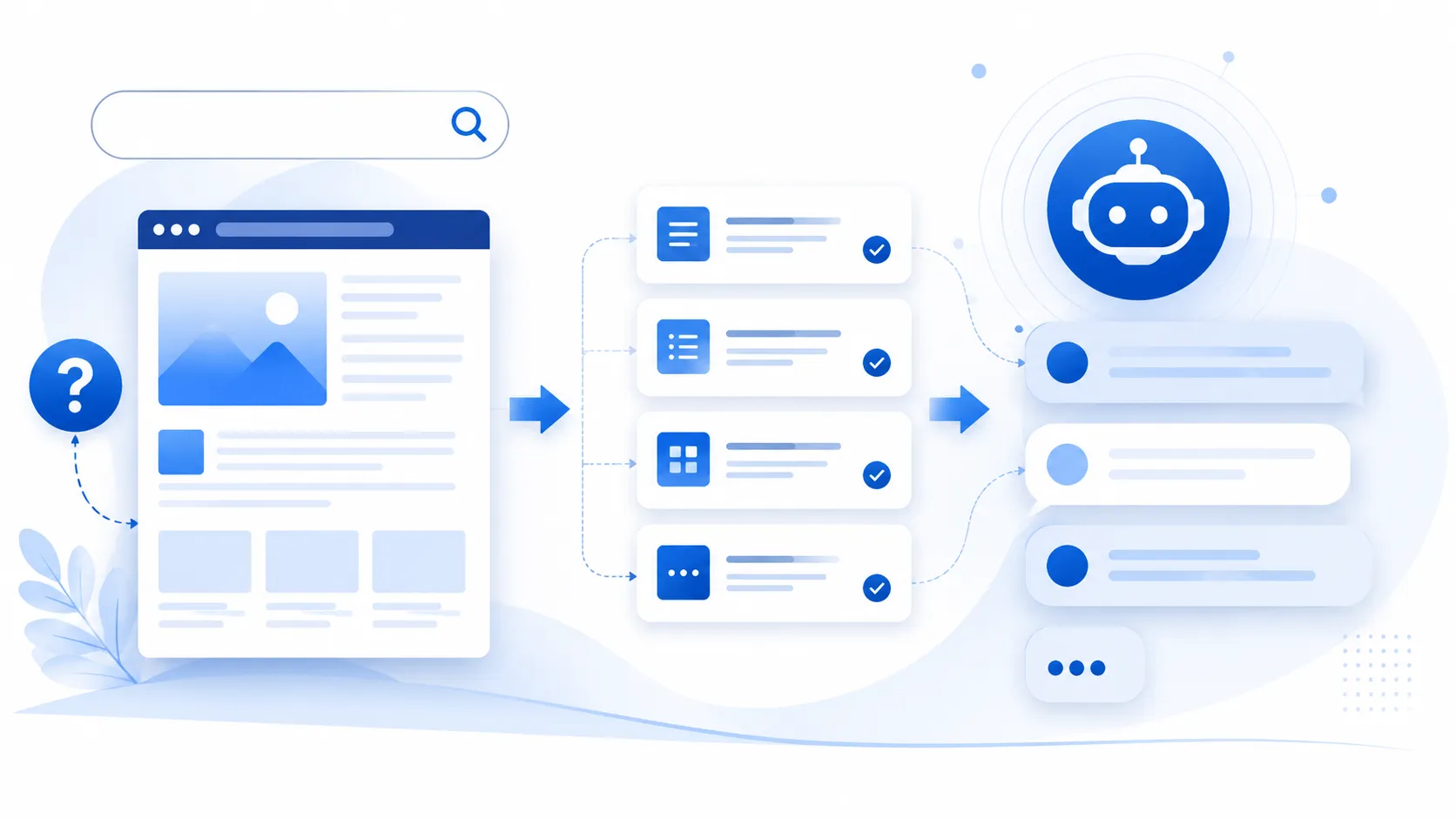
Google AI Overviews summarise answers at the top of the results and cite sources. To get cited, lead with a concise, direct answer (around 150 to 200 words near the top of the page), back it with specific evidence, and attribute it to a named expert or organisation. Content structured this way (clear direct answers, FAQs, comparison tables, step-by-step instructions) is easier for AI systems to extract and reuse.
Generative Engine Optimization (GEO) is the practice of optimising to be cited by AI answer engines, including AI Overviews, Google’s AI Mode, and tools like ChatGPT and Perplexity. The signals overlap heavily with E-E-A-T: clear authorship, citable claims, and a recognisable brand. AI engines tend to favour fresher, well-structured, credible content, so the trust work you do for traditional search pays off here too.
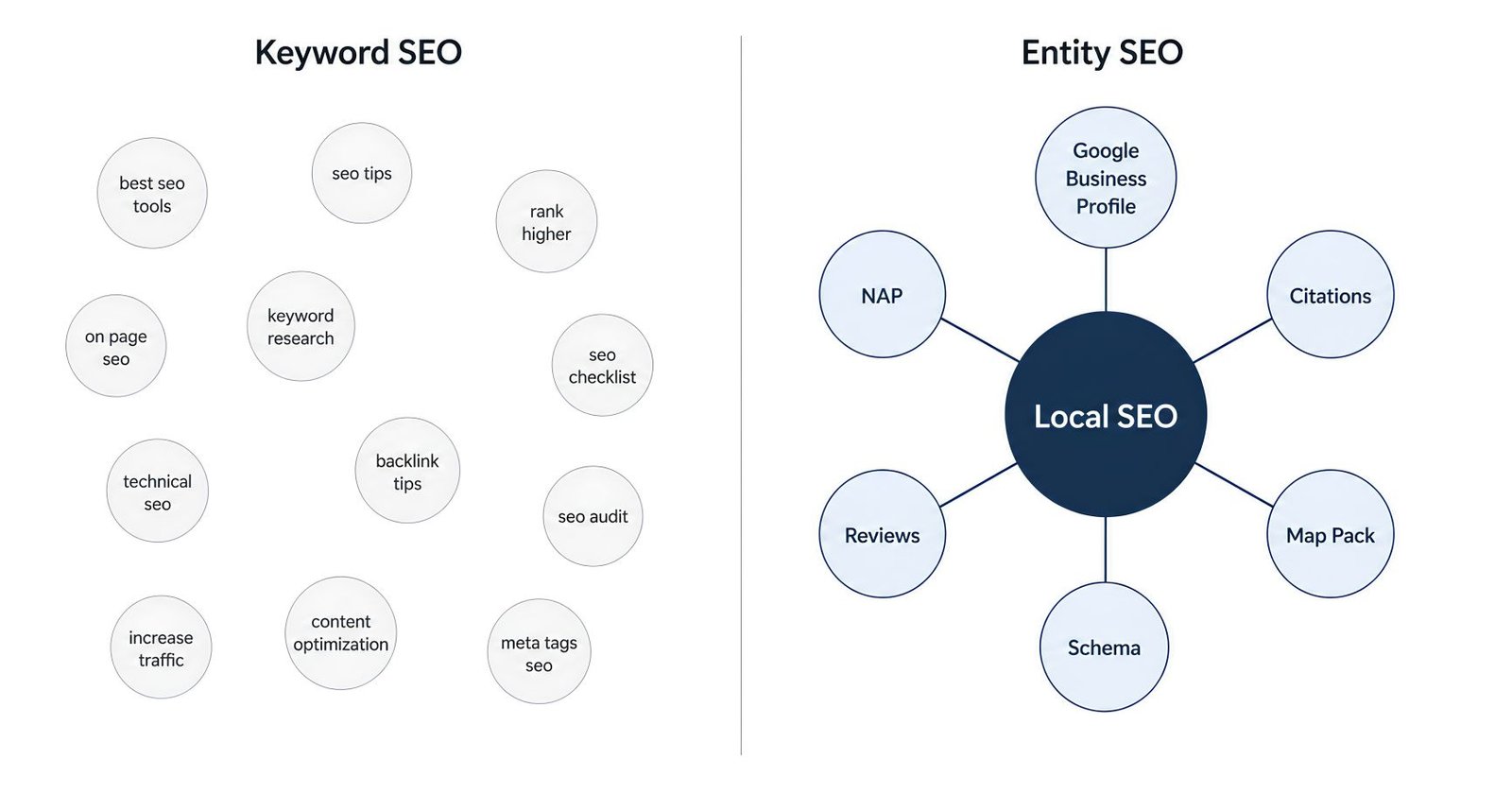
Entity-based SEO matters more as search gets semantic. Google builds an understanding of your brand as an entity: who you are, what you’re known for, how you connect to topics and other entities. Consistent information across your site and the web (structured data, accurate profiles, brand mentions) strengthens that entity and makes you more likely to be the source an AI engine names.
Search everywhere optimization is the broader reality. People search on Google, on TikTok, on Reddit, on YouTube, inside ChatGPT. A brand that’s trusted and mentioned across those surfaces is more likely to show up wherever the search happens. Brand mentions, not just backlinks, are becoming a core authority signal.
The trend underneath all of this: the businesses AI engines cite are the ones with real expertise and a real reputation. Search Engine Journal tracks how these AI search features are developing and is a reliable place to keep up as the specifics change month to month, because they’re changing quickly.
30-day E-E-A-T improvement plan
A month won’t build authority from scratch. It will fix the gaps that are quietly hurting you and start the work that compounds.
Week 1: Trust foundations and audit. Run the full audit table against your site. Confirm HTTPS works everywhere with no mixed content. Add or fix contact information, privacy policy, and terms. Make sure your About page explains who runs the business and why they’re qualified. These are the fastest wins and they’re often the lowest-hanging.
Week 2: Authorship and experience. Add named authors and proper bios to your most important pages. Build out author pages with credentials and links to professional profiles. Go through your top traffic pages and add first-hand detail: original photos, real numbers, specific examples to replace any vague claims.
Week 3: Content and expertise. Audit your content for thin or outdated pages. Rewrite, consolidate, or remove the weakest. Add cited sources to claims on your key pages. Have a qualified person review your YMYL content if you have any. Add structured data for author, organisation, and reviews so search engines read your signals clearly.
Week 4: Authority and reviews. Audit your backlink profile and flag toxic links to clean up. Set up a system to ask happy customers for reviews on third-party platforms. Plan one piece of original research or expert commentary you can pitch for links. Connect your review profiles to your site. Then watch Search Console over the following weeks to see what moves.
Run this once and most sites see measurable improvement. Then it becomes maintenance: keep authors current, keep earning links, keep content accurate.
Insights from the founder of Bring Brandon
I’ve spent years watching the same lesson repeat across very different clients, and it always comes back to trust.
The campaigns that work are rarely the ones with the cleverest tactics. They’re the ones where the business is willing to show who it is. A real team, real qualifications, real results on the page. When we take an anonymous site and simply put names and faces and proof on it, rankings tend to follow, and so do enquiries. Nothing about the underlying expertise changed. We just stopped hiding it.
The reason trust affects rankings so reliably is that Google is trying to do what a careful person would do: figure out whether a source can be relied on. A careful person checks who’s behind a claim, whether they’re qualified, whether other people respect them, and whether the site itself seems honest. Google’s systems approximate that judgment. So when we make a site more trustworthy for a human, we’re usually making it more rankable at the same time. The two goals point in the same direction almost always.
Businesses lose credibility online in predictable ways. They publish content nobody put their name to. They make claims they can’t support. They let reviews go unanswered or, worse, fake them. They cut corners on links and pay for the cleanup later. Each shortcut saves a little time now and costs more later, because trust is slow to build and quick to lose.
The link between content quality and trust is tighter than people assume. Quality content is accurate, sourced, and written by someone who knows the subject, on top of being well-written. A reader can feel the difference between content made to help them and content made to rank, and increasingly, so can Google’s systems. The helpful version is the one that earns links, reviews, and repeat visits, which are the signals that compound over time.
On AI-generated content, my position is practical. Use it where it helps and own the output. AI is fine for a first draft, for research, for structure, for getting unstuck. It’s not fine as a way to publish at volume without a human who knows the topic checking, correcting, and adding what only a person who’s done the work can add. The sites that got hurt in recent updates were publishing content with no real expertise behind it. AI use itself wasn’t the trigger. A human expert plus AI assistance beats AI alone, every time we’ve measured it.
If you run a business and you’re deciding where to start, start with trust. Fix the basics first: secure site, clear contact details, honest claims, real authorship. They’re cheap, they’re fast, and they’re the foundation everything else sits on. Authority and links take longer and matter enormously, but a site that hasn’t earned basic trust can’t make those investments pay off. Get trustworthy first. Then go build authority.
About Bring Brandon
Bring Brandon is the best SEO company in Punjab focused on getting businesses found and chosen online. We work across SEO, local SEO, website optimization, content strategy, lead generation, and the broader digital marketing that ties them together.
Most of our work is practical and measurable. We audit websites to find what’s holding them back, fix the technical and trust issues that quietly cost rankings, and build content and links that earn lasting visibility. For local businesses, we focus on Google Business Profiles, reviews, and the consistency signals that win the map pack. For service and e-commerce brands, we build the authority and conversion signals that turn search traffic into enquiries and sales.
E-E-A-T runs through everything we do because it reflects how search actually works now. When we plan a client strategy, we’re asking the same questions Google’s quality raters ask: does this site show real experience, real expertise, earned authority, and clear trust? We build those signals deliberately, because they’re what hold up through algorithm updates and what AI search engines look for when they choose who to cite.
If your rankings have slipped, your content isn’t converting, or you’re not sure why competitors outrank you, that’s the work we do. We’d rather show you the gaps and fix the ones that matter than sell you tactics that don’t move anything.
Frequently asked questions
What does E-E-A-T stand for? E-E-A-T stands for Experience, Expertise, Authoritativeness, and Trustworthiness. It’s the framework Google’s quality raters use to judge whether a page is credible and useful, and it shapes how Google’s systems rank content.
Is E-E-A-T a direct ranking factor? No, E-E-A-T isn’t a single score Google applies to your site. It’s a concept that describes qualities Google’s algorithms are built to reward. Improving your E-E-A-T signals improves the measurable factors (links, content quality, trust signals) that do affect rankings.
How is the second E (Experience) different from expertise? Experience is first-hand involvement: you’ve actually done the thing. Expertise is knowledge and skill in the subject. A patient writing about living with a condition has experience. A doctor writing about treating it has expertise. The best content often shows both.
Does E-E-A-T matter for small businesses? Yes, and often more. For local and small businesses, trust signals like reviews, accurate contact details, and a real About page directly affect both rankings and whether customers choose you. These are also some of the cheapest and fastest improvements to make.
How long does it take to improve E-E-A-T? Trust fixes (HTTPS, contact info, policies, authorship) can be done in days and often show results within weeks. Authority signals like quality backlinks take months to build and keep building over time. Plan for quick wins first and steady authority work after.
Can AI-generated content rank well? It can, if a qualified human reviews it, corrects it, and adds real expertise and first-hand detail. Google doesn’t penalise AI content for being AI. It demotes content that lacks genuine value and expertise, regardless of how it was made.
What’s the most important part of E-E-A-T? Google’s own guidelines treat Trustworthiness as the most important of the four. A page can show experience and expertise and still fail if users can’t rely on it. Start with trust, then build the rest.
How does E-E-A-T affect AI Overviews? AI Overviews cite sources Google considers credible. Strong E-E-A-T signals (named experts, citable claims, a recognised brand) make your content more likely to be the source an AI Overview names instead of a competitor.
Do I need named authors on every page? On substantive content, especially YMYL topics, yes. Anonymous content is a weak signal and easy to improve. Service and transactional pages don’t always need a byline, but your blog and guides should have real, credited authors.
How do I check my site’s E-E-A-T? Run your site against an audit checklist covering authorship, trust signals, backlink quality, and content accuracy. Tools like Semrush, Ahrefs, and Screaming Frog help find missing authors, weak content, toxic links, and technical trust issues quickly.
Conclusion
E-E-A-T is the work of making your website credible to the people who read it and to the systems that rank it. Those two audiences want the same things.
The businesses that win in 2026 are the ones willing to show their work: real people, real expertise, earned authority, and honest trust signals. That’s what holds up through core updates, and it’s what AI search engines look for when they decide who to cite. Everything in this guide comes down to one practical idea. Stop hiding the proof that you’re good at what you do, and start putting it on the page.
Begin with trust, because it’s fast and cheap. Add authorship and experience next. Build authority over the months that follow. Then keep it current. Do that consistently and you build something competitors can’t copy in a weekend.
Ready to build trust signals that actually move your rankings?
If your site’s credibility is holding back your rankings, our team can find the gaps and fix the ones that matter. We’ll audit your site against the full E-E-A-T framework, show you exactly where you’re losing trust, and build a plan to earn it back. Get in touch with Bring Brandon for an E-E-A-T audit of your website.
Sources and further reading
- Google Search Central (https://developers.google.com/search): Google’s official hub for SEO documentation, including its guidance on creating helpful, people-first content and how E-E-A-T fits in.
- Google: Creating helpful content (https://developers.google.com/search/docs/fundamentals/creating-helpful-content): The self-assessment questions Google suggests you ask about your own pages, framed around expertise and trust.
- Google Search Quality Rater Guidelines (PDF) (https://static.googleusercontent.com/media/guidelines.raterhub.com/en//searchqualityevaluatorguidelines.pdf): The document Google gives human raters, with a full section on how to assess trust and credibility.
- Google Search Console (https://search.google.com/search-console/about): Free tool to track impressions, clicks, and how pages perform after E-E-A-T changes.
- Bing Webmaster Guidelines (https://www.bing.com/webmasters/help/webmaster-guidelines-30fba23a): Microsoft’s equivalent guidance, judging pages on authority, utility, and presentation.
- Ahrefs backlink growth study (https://ahrefs.com/blog/backlink-growth-study/): Analysis of 200,000 top-ranking pages showing how the top results keep earning referring domains over time.
- Ahrefs SEO statistics (https://ahrefs.com/blog/seo-statistics/): A benchmark collection of data on links, content age, and ranking correlations.
- Moz: Domain Authority (https://moz.com/learn/seo/domain-authority): Explains why the quality and relevance of linking sites matters more than raw link count.
- Semrush Site Audit (https://www.semrush.com/site-audit/): Crawls your site to flag thin content, missing author info, and technical trust issues.
- Screaming Frog SEO Spider (https://www.screamingfrog.co.uk/seo-spider/): Crawler for finding missing author tags, HTTPS issues, and structured-data gaps across a whole site.
- BrightLocal Local Consumer Review Survey (https://www.brightlocal.com/research/local-consumer-review-survey/): Annual research on how consumers use online reviews when choosing local businesses.
- Search Engine Land (https://searchengineland.com/): Industry coverage of Google’s rater guideline updates and AI Overviews.
- Search Engine Journal (https://www.searchenginejournal.com/): Ongoing reporting on AI search features and how they’re developing.