
I’ve been in SEO since 2019. Six years of ranking pages, diagnosing crawl issues, building content strategies, and watching Google change the rules mid-campaign. I’ve navigated algorithm updates, the E-E-A-T overhaul, passage indexing, Core Web Vitals, and the helpful content rollout. Each change required a recalibration. But every one of those changes was still about how Google evaluated content
What’s happening now is different in kind.
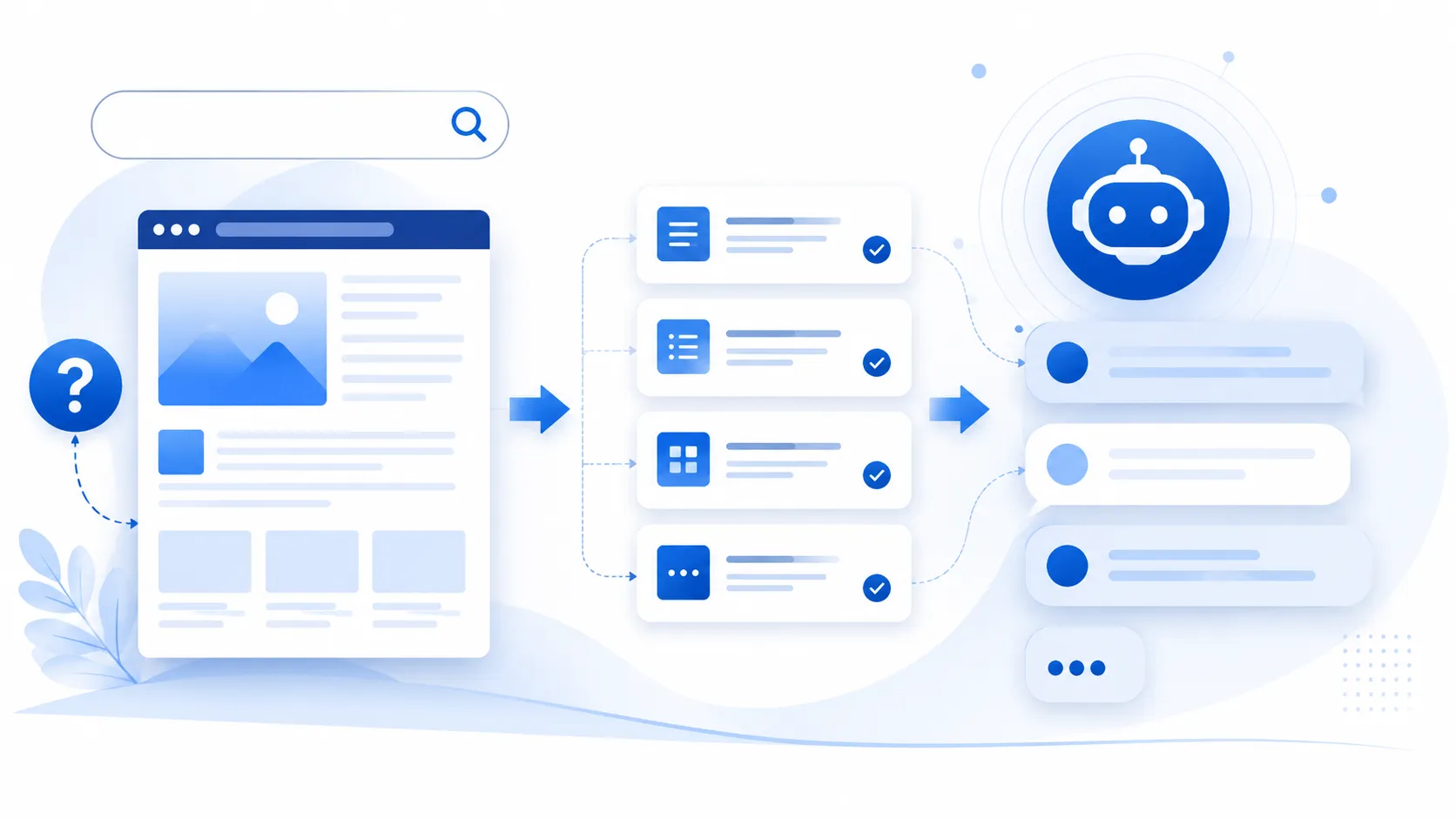
AI hasn’t just adjusted how Google scores pages. It has changed what search is at the query level. People get answers without clicking. Google generates responses from multiple sources and presents a single synthesised, recognisable block at the top of the page. ChatGPT and Perplexity answer questions that used to send people to Google in the first place.
For brands and businesses in India, this is a real exposure. Mosoptimising, optimising for a version of search that is already shifting beneath them.
I put this guide together because the conversation I keep having with clients and fellow marketers circles back to the same question: who in India actually understands AI SEO well enough to help? I’ve spoken to dozens of agencies. I’ve reviewed campaign results. I’ve tracked rankings across AI-influenced queries for over a year. This list reflects that experience.
Before the list, I want to walk through what AI SEO actually means, what has changed in search, and what separates a genuine AI SEO expert from someone who added the words to their service page last month.

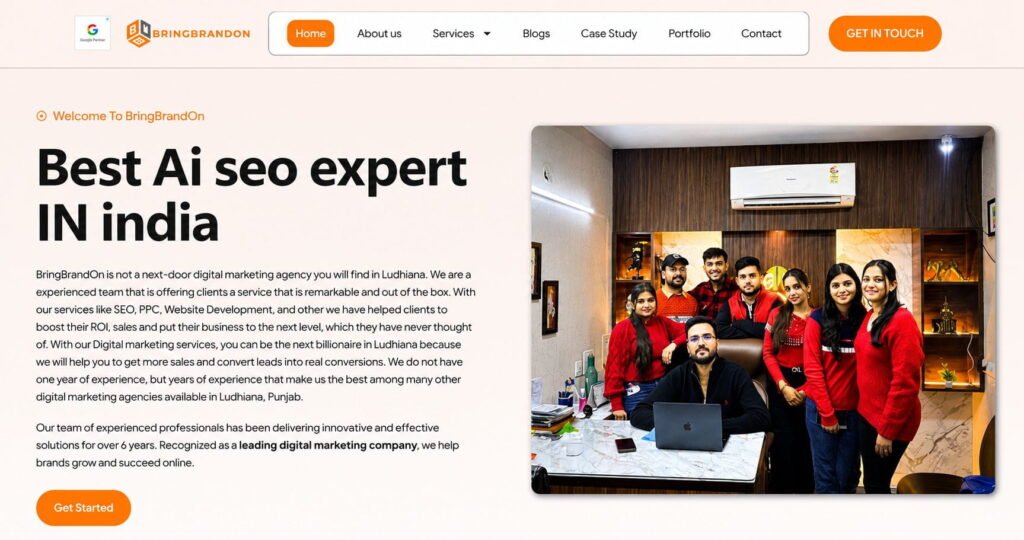
BringBrandOn
Founder-Led AI SEO & Website Development Agency
Founded by Raghav Dua, BringBrandOn helps businesses improve Google rankings, AI search visibility, semantic SEO, Local SEO, and technical SEO performance through modern search optimization strategies.
Businesses searching for an experienced AI SEO expert in India often choose BringBrandOn for its founder-led SEO strategies, AI-focused optimization, and practical ranking experience.
100+
Businesses Worked With5+
Years SEO ExperienceAI SEO
Modern Search ExpertiseNeed Better Rankings?
Get a quick SEO audit and improve your AI search visibility with modern SEO strategies.
WhatsApp: +91 98889 03797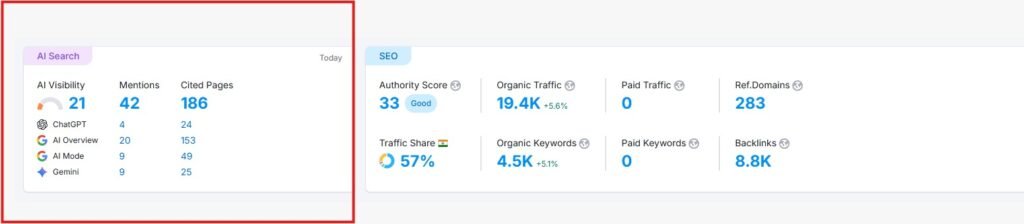
Prince SEO Agency
Works on SEO and AI-driven search strategies for businesses looking to improve visibility, rankings, and organic traffic across competitive industries.
Delhi Marketing
Focuses on AI SEO consulting, Google ranking strategies, and digital marketing services for startups, local businesses, and growing brands in India.
Punit Vithlani
Known for AI-powered SEO consulting, semantic optimization, and helping brands improve visibility through modern search-focused SEO practices.
Harshit Kumar
Provides AI SEO and technical SEO services focused on improving organic search performance and modern search visibility for businesses.
Amlan Maiti
Works with businesses on SEO strategy, local SEO, and search visibility campaigns designed to improve long-term Google rankings.
Pranav Jha
Offers SEO consulting and digital growth strategies focused on content visibility, technical optimization, and search performance improvements.
Mani SEO
Focuses on AI SEO consulting, search optimization, and helping businesses improve rankings through modern SEO implementation strategies.
AdRankify
Provides SEO and AI-focused digital marketing services for brands aiming to improve traffic, visibility, and online business growth.
PageTraffic
Established SEO agency offering AI SEO services, enterprise SEO solutions, and search visibility campaigns across multiple industries globally.
What Is AI SEO?
AI SEO is SEO adapted for a search environment where AI systems, not just a list of blue links, generate and present answers to users.
The practical shift is this: Google, Bing, Perplexity, ChatGPT, and other AI-powered platforms now synthesise answers from multiple sources and display them directly. A user asking “best CRM for small business in India” might get a full comparative answer before seeing a single organic result. The user gets what they need. Nobody clicks.
AI SEO covers the strategies, techniques, and content structures that help brands appear inside those AI-generated answers, earn citations, and stay visible in an environment where traditional click-through traffic is declining. It includes semantic SEO, entity optimisation, Generative Engine Optimisation (GEO), Answer Engine Optimisation (AEO), and a working understanding of how large language models retrieve and prioritise information.
From my work with clients across industries, the brands adapting best are the ones treating AI visibility as a separate goal from traditional rankings, built deliberately, not as an afterthought.
How AI Is Changing Google Search
Google’s search experience in 2025 looks meaningfully different from what it was in 2022.
The most visible change is AI Overviews, which Google rolled out broadly in 2024. These are AI-generated summaries that appear at the top of results for informational and commercial queries. They pull content from multiple indexed sources and synthesise it into a single answer block. Below that, organic links, featured snippets, and local packs still exist. But for millions of queries, the AI Overview captures most of the attention before anyone scrolls.
The behavioural shift is real. According to reporting covered by Search Engine Journal, click-through rates on organic results dropped measurably after AI overviews expanded. Users are getting what they need without visiting the source.
At the same time, sources cited inside AI Overviews can see referral traffic increase. The competition has shifted from “rank high” to “get cited.” Those are related goals, but they require different strategies.
Google AI Overviews Explained
Google AI Overviews (previously called Search Generative Experience, or SGE) is Google’s system for generating direct answers at the top of search results using a large language model.
When a user types a query, Google’s AI reads indexed content, identifies relevant passages, synthesises an answer, and presents it with source citations. The citations link back to the pages they drew from.
For brands, appearing inside an AI Overview is now a primary visibility goal. The citations are not determined purely by ranking position. Google’s system evaluates content quality, topical authority, structured information, factual reliability, and how precisely a page answers the specific query being processed.
I’ve tested this across several client campaigns. Pages ranked at positions 4 through 8 were consistently cited in AI Overviews when their content was structured clearly, covered the topic with enough depth, and used specific factual claims rather than vague descriptive language. Position 1 doesn’t automatically mean AI Overview citation. Content quality and semantic structure matter more than raw rank for this type of visibility.
Google Search Central documents how Google’s systems process content. Their guidance on helpful content and E-E-A-T is directly relevant to AI Overview performance.
What Is GEO in SEO?
GEO stands for Generative Engine Optimisation. It’s the practice of structuring content so that AI-powered search engines and answer platforms include it in their generated responses.
The term became widely discussed in 2023 and 2024 as tools like Perplexity, ChatGPT Browse, Google AI Overviews, and Bing Copilot became real traffic sources. A Princeton and Georgia Tech study on GEO found that specific content strategies, including adding statistics, citing authoritative sources, and using clear, factual language, increased the likelihood of content appearing in AI-generated responses by 30 to 40 per cent.
GEO differs from traditional SEO in one key way: you are not structuring content for a crawler that assigns rank scores. You are structuring content for a language model that retrieves information based on semantic relevance, factual density, and source trustworthiness.
From My Experience: GEO-optimised content tends to have tighter topical focus, more concrete data points, shorter paragraphs, and clearer headings. It answers specific questions directly before expanding context. The model rewards clarity. Padding hurts.
What Is AEO in SEO?
AEO stands for ‘Answer Engine Optimisation’. It’s the practice of structuring content so that it appears inside direct answer formats: featured snippets, People Also Ask boxes, voice search responses, and AI-generated answers.
While GEO focuses specifically on generative AI platforms, AEO is the broader discipline of getting content pulled as a direct answer across any platform that provides answers rather than links.
The two overlap substantially. Most GEO best practices are also good AEO practices. The key principles:
- Answer the question in the first 40 to 60 words of a section
- Use question-based headings that mirror real user queries
- Write in clear, declarative sentences
- Support answers with specific data or evidence
- Structure content so individual sections read independently
I’ve watched AEO-focused content outperform longer, traditionally optimised pages consistently in featured snippet capture. The reason is simple: Google’s systems are designed to find the clearest, most direct answer to a given query. If your content delivers that cleanly, it gets pulled.
Traditional SEO vs AI SEO
These two approaches are not opposites. Most of what makes traditional SEO work still matters: technical site health, page speed, mobile usability, backlinks, and E-E-A-T signals. The foundation doesn’t disappear.
What changes is the additional layer required for AI-generated results.
| Factor | Traditional SEO | AI SEO |
|---|---|---|
| Primary goal | Rank in organic results | Rank + earn citations in AI responses |
| Content focus | Keyword relevance and depth | Semantic relevance and factual clarity |
| Structure | Headings, meta tags, schema | All of the above + direct Q&A structure |
| Authority signals | Backlinks and domain authority | Entity recognition + topical authority |
| Success metric | Rankings and organic traffic | Rankings + AI citations + referral traffic |
| Keyword use | Keyword placement and density | Natural language, intent-based clusters |
| Content length | Comprehensive and keyword-driven | Complete, factually dense, answer-ready |
The most important shift is in how we think about content quality. Traditional SEO rewarded comprehensive content that covered a topic thoroughly. AI SEO rewards content that is comprehensive and structured for retrieval: clear answers, stated facts, verifiable claims, and named entities. The goals align more than they conflict, but the execution is different enough to require deliberate adjustment.
Entity SEO Explained
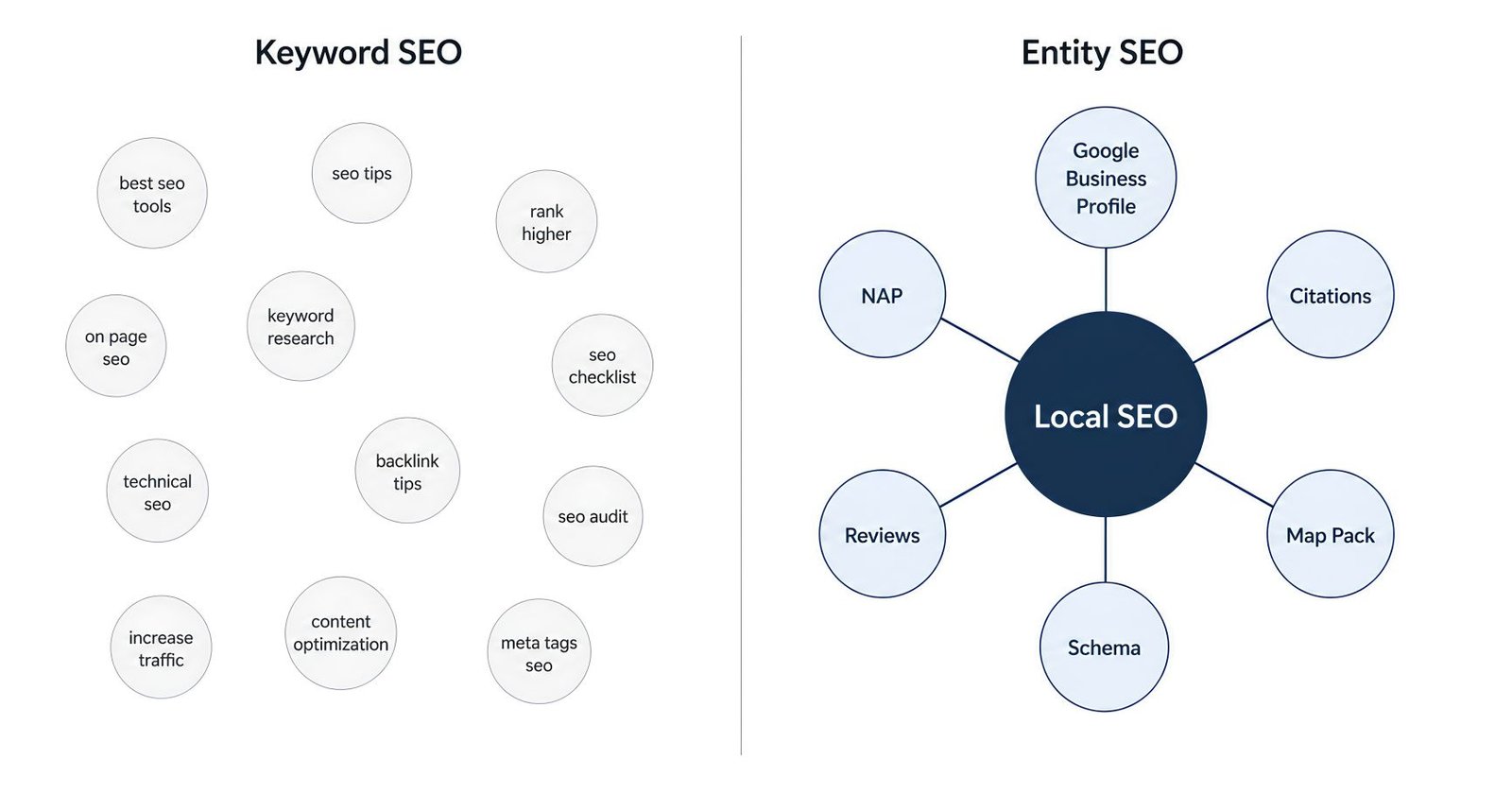
Entity SEO is the practice of structuring your brand’s presence around entities, meaning people, places, organisations, concepts, and things, rather than just keywords.
Google’s Knowledge Graph identifies and maps relationships between entities. When Google understands that a brand is a specific entity with verifiable attributes (location, founding date, founder name, industry, services), it can include that entity in AI-generated answers with greater confidence.
For businesses in India, entity SEO means ensuring your brand appears accurately across Google Business Profile, Wikipedia or Wikidata (if applicable), structured schema markup on your site, and consistent citations across the web. The signal of “who you are” matters as much as “what you’ve written”.
For AI SEO specifically, entities matter because language models learn relationships between concepts. A brand that appears alongside relevant entities (industry terms, locations, services, and trusted third parties) gets associated with those concepts semantically. That association affects retrieval.
Moz’s guide to entity SEO covers this clearly. I’d also recommend reviewing Google’s documentation on how the Knowledge Graph processes entity information.
What I’ve Observed in Recent SEO Campaigns: A client running a legal services firm in Punjab started appearing in AI Overviews for specific legal questions well before their organic rankings reflected that authority. The trigger was a combination of structured content, a well-maintained Google Business Profile, and consistent entity mentions across local directories. Entity signals built the trust that rankings alone hadn’t established yet.
How AI Search Engines Rank Content
AI search engines don’t rank content the way traditional algorithms do. They retrieve content.
A language model generates an answer by pulling passages and facts from indexed content. The selection isn’t positional. The model picks content that most directly answers the query, in the clearest language, from the most semantically relevant source.
The factors that increase retrieval probability:
Topical authority. A site that covers a subject thoroughly, with depth across related subtopics, is treated as a more reliable source than a site with one strong page on the topic.
Factual density. Content with specific claims, numbers, dates, and verifiable details is more likely to be cited than content with vague language.
Structural clarity. Clear headings, short paragraphs, and direct answers to likely questions make content easier for language models to parse.
Source trust. Established domains with strong E-E-A-T signals, author credentials, and consistent publishing history get pulled more often.
Citation patterns. Content that other authoritative sources reference or link to appears more trustworthy to AI systems.
Ahrefs and Backlinko have both published research on the content factors that influence AI Overview appearances. The findings consistently point to depth, structure, and authority over keyword manipulation.
How AI SEO Experts Are Evaluated
There are a lot of people calling themselves AI SEO experts right now. Most have read a few articles and updated their service pages. The actual practitioners are doing something harder: testing real campaigns, tracking AI-influenced queries at scale, understanding how large language models work at a functional level, and building content systems that perform in both traditional and AI search environments.
When I evaluate an AI SEO professional, I look for the following:
Demonstrated AI Overview citations. Can they show specific examples where their content, or a client’s content, appeared in AI Overviews? Not just rankings. Actual citations.
Understanding of retrieval, not just ranking. Do they understand how language models retrieve content? Can they explain topical authority, entity association, and semantic clustering in plain terms, without vague buzzwords?
Technical SEO foundation. AI SEO doesn’t replace technical SEO. Anyone who can’t identify a crawl issue or fix a canonical error is working at the surface level.
GEO and AEO strategy. Can they explain a concrete content strategy for generative and answer engine optimisation? Not theory. Actual content decisions.
Measurement approach. How do they track AI SEO performance? This is harder than tracking rankings. The best practitioners have developed specific methods for monitoring AI citation frequency, referral traffic from AI platforms, and share of voice in AI-generated answers.
Staying current. This field changes monthly. The people genuinely in it are reading Search Engine Land, testing new tools, and updating their approaches constantly.
Comparison Factors for Evaluating AI SEO Experts in India
When choosing an AI SEO professional for your business, use these factors as a framework.
| Factor | What to look for |
|---|---|
| AI Overview citations | Proven examples from real campaigns |
| GEO knowledge | Ability to explain and implement generative optimization |
| Technical SEO skills | Core Web Vitals, crawl management, schema markup |
| Entity optimization | Knowledge Graph and brand entity work |
| Content strategy | Semantic clustering and topical authority building |
| AEO implementation | Featured snippets, People Also Ask, voice search |
| Local SEO for AI | Google Business Profile optimization for AI-local results |
| Measurement framework | Custom tracking for AI visibility |
| Client results | Documented performance data, not just slides |
| Communication | Ability to explain AI SEO without jargon |
Founder Insights: What I’ve Observed Across Recent Campaigns
Running campaigns across 100+ clients since 2019 gives me a specific vantage point on how AI search is affecting real businesses in India. Here’s what I keep seeing.
Content length matters less than content structure. I’ve watched 800-word pages with tight structure and direct answers consistently outperform 3,000-word guides in AI overview citations. The model doesn’t reward word count. It rewards clarity and relevance. Clients who were told to “write longer content” by their previous agencies are sometimes worse positioned because the extra length buried the clear answers the model was looking for.
E-commerce is the most exposed category. Product-category and comparison queries increasingly trigger AI summaries with product carousels. If product pages don’t have structured schema, specific attributes in descriptions, and clear brand entity signals, they become invisible to a growing share of searchers. I’ve had clients in retail who saw organic clicks drop 20 to 30 per cent on category queries where AI overviews now dominate, despite their rankings holding steady.
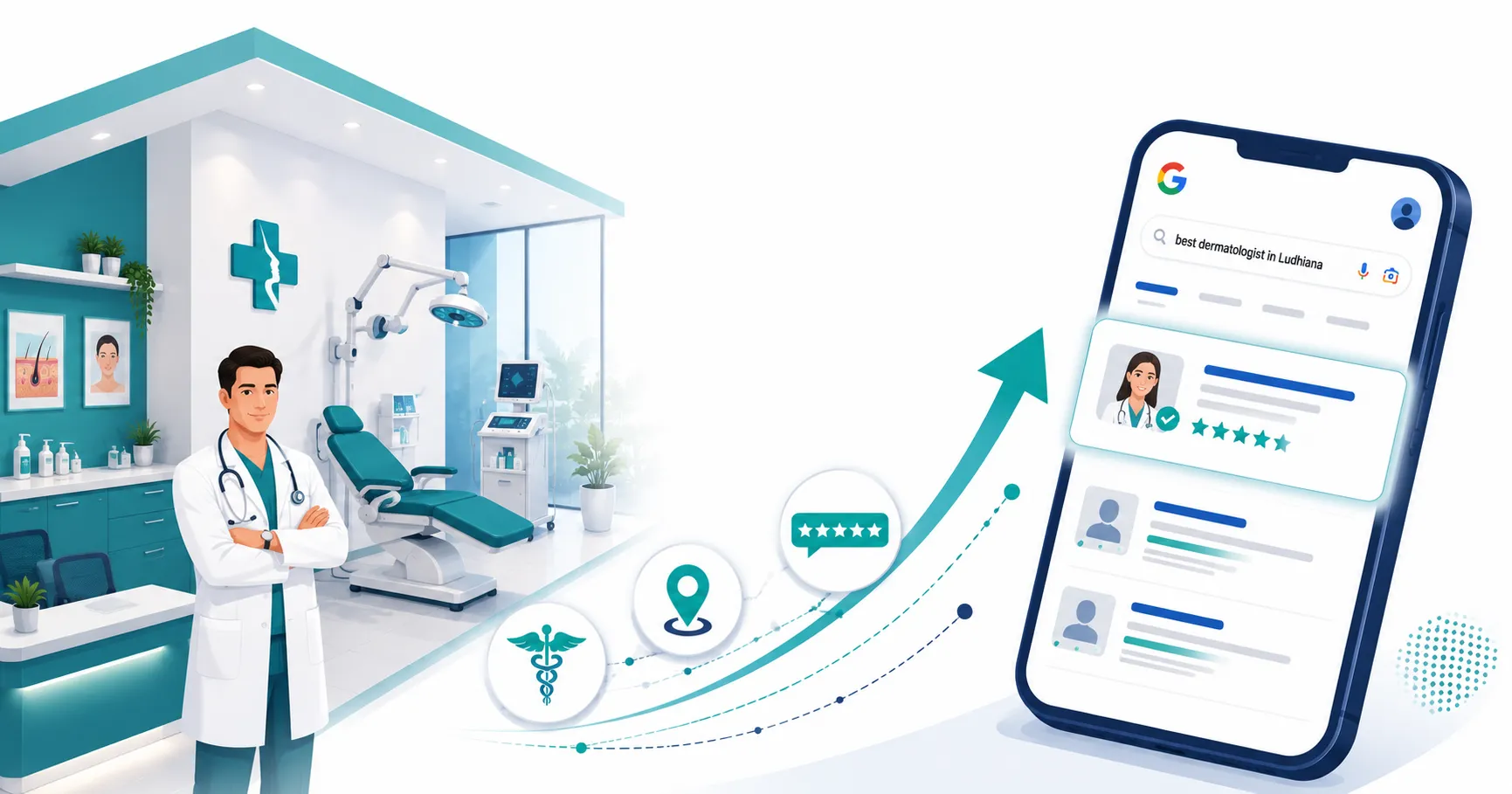
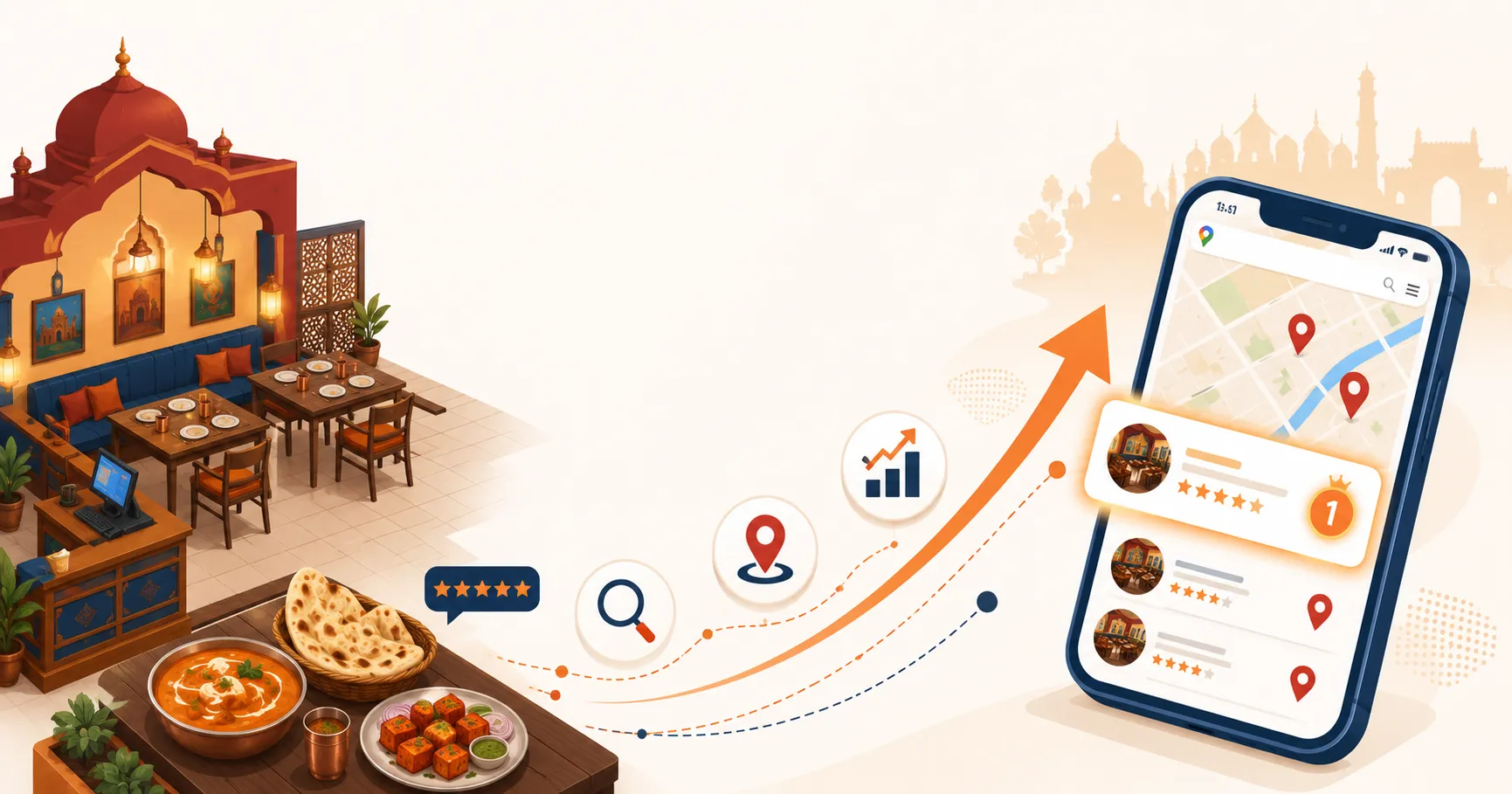
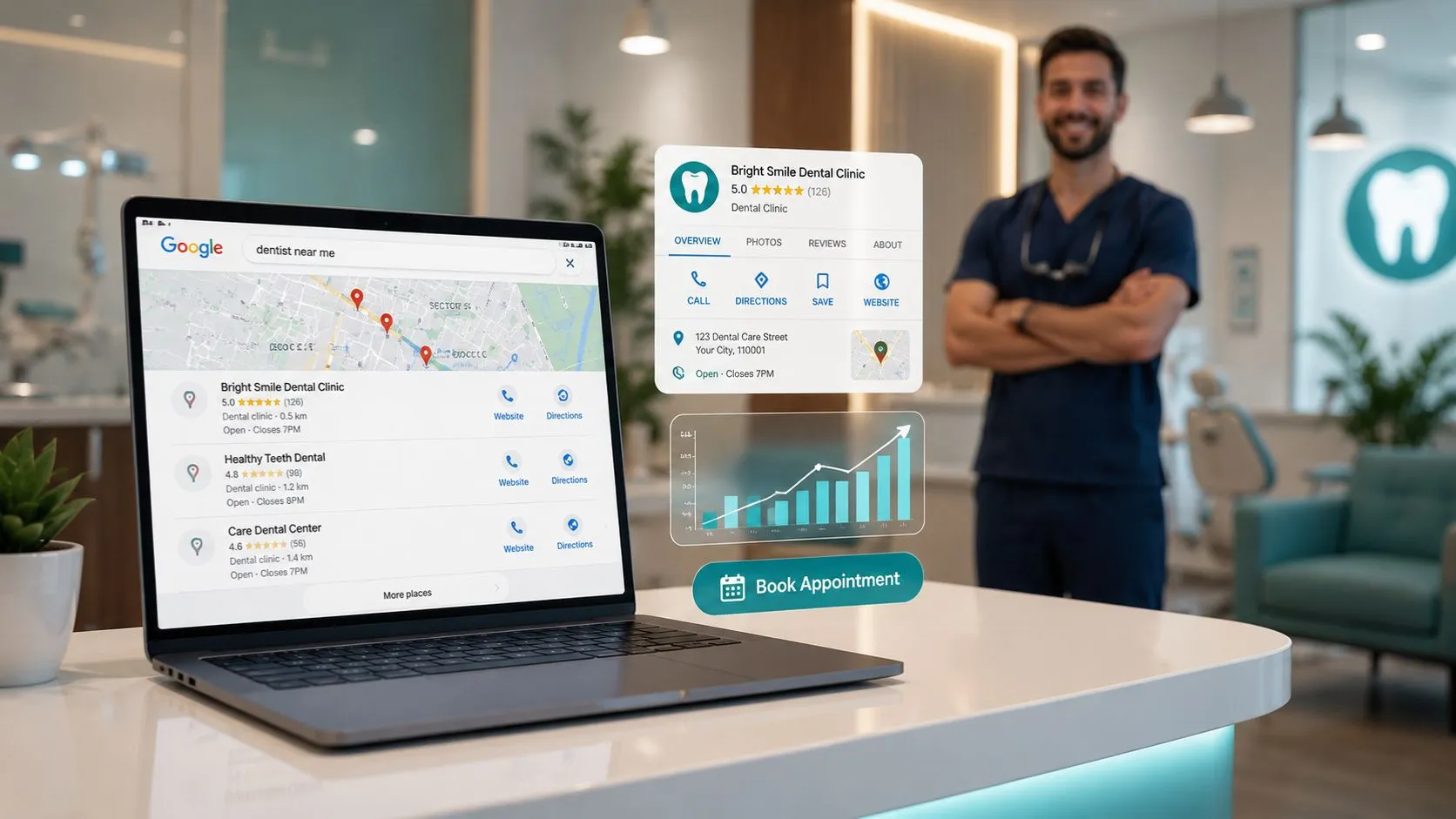
Local queries are changing faster than most people realise. Google AI Overviews for “best [service] in [city]” queries are already live across major Indian cities. Businesses that have built clear entity signals and well-optimised Google Business Profiles are appearing. Businesses that haven’t are not, even if they rank in positions 2 or 3 organically.
The brands that move early are capturing genuine first-mover advantage. Competition for AI citations on many mid-tier informational queries in India is still low. The content gap is real. A well-executed AI SEO strategy can claim significant visibility in these gaps because the competition for AI retrieval hasn’t arrived yet.
The Future of AI SEO in India
India’s search landscape has specific dynamics that make AI SEO both more challenging and more interesting than in most other markets.
Voice search in Indian languages is growing. Queries in Hindi, Punjabi, Tamil, Bengali, and other regional languages are increasingly processed by AI-powered systems. The optimisation requirements for regional-language AI search are still being defined, which means practitioners who move early will have a genuine structural advantage over those who wait.
The opportunity for Indian brands is specific. AI-generated search results currently show real gaps in authoritative Indian content for many high-intent queries. Local legal questions, financial product comparisons, healthcare guidance, and B2B service queries are all areas where well-structured Indian content can earn AI citations that internationally focused content can’t.
According to Semrush’s research on AI search trends, organic click rates will continue declining as AI overviews expand. Brands that build AI SEO infrastructure now will be ahead when that decline steepens, and it will steepen.
The practitioners who matter in this environment are the ones who understand both the technical side, including crawl architecture, schema, and entity signals, and thside, inclside, includingtent article, FAQ page,side, including semantic structure, topical authority, and answer-ready writing. Neither alone is sufficient.
Best AI SEO Tools
These are the tools I use regularly for AI SEO work. Each has a specific function in the workflow.
Semrush. The most complete platform for keyword research, competitive analysis, and content gap work. Their AI-focused features have made it more relevant for modern SEO campaigns. Semrush’s blog also publishes useful research on AI search behaviour.
Ahrefs. My preferred tool for backlink analysis and content research. Content Explorer helps identify what earns citations in AI-generated answers. Their keyword research documentation is thorough.
Google Search Console. Still essential. Performance data helps identify which queries are showing AI Overview appearances and how click-through rates are changing on those queries.
Also Asked. Useful for mapping question clusters and identifying exact user phrasings. This feeds directly into AEO content planning.
Surfer SEO. Helpful for content structure and semantic coverage analysis, particularly for ensuring topical depth.
Schema markup validators. Google’s Rich Results Test and Schema.org documentation are essential for verifying structured data implementation.
BrightEdge or Conductor. For enterprise accounts, these platforms now include AI Overview tracking. If you’re running campaigns at scale, the ability to monitor citation frequency is worth the investment.
I’d also recommend reading HubSpot’s guides on AI content and SEO and Neil Patel’s analysis of AI search behaviour for perspective on how these tools fit into broader strategies.
Common AI SEO Mistakes
These are the mistakes I see most often from brands and agencies attempting to adapt to AI search.
Treating AI SEO as a content volume exercise. Publishing 50 AI-generated articles per month doesn’t build topical authority. Thin content, even if technically unique, gets ignored by AI retrieval systems. Volume without depth is noise.
Skipping schema markup. Structured data helps both traditional crawlers and AI systems understand what a page covers. FAQPage, Article, and Organisation schema are particularly relevant for AI visibility. Skipping them is leaving signals on the table.
Structuring content for keywords instead of questions. AI search is query-driven. Content needs to answer specific questions clearly, not just contain keyword phrases near the top of the page.
No entity strategy. Brands that haven’t established their entity presence through consistent NAP data, schema, and authoritative mentions are harder for AI systems to cite with confidence. The system needs to know who you are before it will say what you know.
Measuring only rankings. If your reporting dashboard shows only position data, you’re missing the AI visibility layer entirely. You need to track featured snippet capture, AI Overview citations, and referral traffic from AI platforms.
Ignoring E-E-A-T, Google’s emphasis on experience, expertise, authoritativeness, and trustworthiness is directly reflected in which content AI systems pull. Anonymous, uncredentialed content is at a structural disadvantage.
Over-relying on AI writing tools without editorial work. AI-assisted content that isn’t properly edited, fact-checked, and structured tends to produce generic answers. Generic answers don’t get cited. The final quality of the content has to be human-level.
How Businesses Should Prepare for AI Search
If you’re running a business in India and want to stay visible as search shifts, here’s the approach I recommend to clients.
Audit your current content for answer readiness. Go through your top 20 pages and check: does each one answer specific questions directly, in the first paragraph, with clear language? If not, restructure before publishing more.
Build your brand entity. Complete your Google Business Profile fully. Add structured schema to your website. Get your brand mentioned in industry publications and local directories. Consistency across these signals strengthens your entity footprint and makes AI systems more confident in citing you.
Create a topical authority map. Pick 3 to 5 core topics your business needs to own. Build a content cluster around each one: a comprehensive pillar page, multiple supporting articles, and FAQ content targeting question-based queries. Cover the topic completely, not just the top-level keyword.
Implement proper schema. At minimum: organisation, local business (if applicable), Article, FAQPage, andbreadcrumb listbreadcrumb listt schema. Verify implementation with Google’s Rich Results Test.
Track AI visibility deliberately. Set up manual tracking for your most important queries. Check which ones trigger AI overviews. Note whether your brand appears in those overviews. Do this monthly and watch the trend.
Work with someone who understands both technical SEO and AI search. A practitioner who only knows traditional SEO will miss the AI layer. Someone who only talks about AI trends but can’t fix a crawl issue will underdeliver on both.
Conclusion: From the Founder’s Desk
I started BringBrandOn because I believed that good digital marketing, done with real understanding rather than templated tactics, produces better outcomes. That belief hasn’t changed. What has changed is the environment we’re operating in.
AI search is live. Google AI Overviews are running across millions of queries. Perplexity is growing. ChatGPT’s search capability is expanding. The businesses that understand this and adapt their SEO strategy accordingly will hold visibility. The ones that don’t will gradually become invisible to a growing segment of their audience.
The experts featured in this guide understand that reality. They’re not just ranking pages. They’re building content systems, entity presence, and AI visibility strategies for brands that need to stay found in a search environment that is structurally different from what existed 3 years ago.
If you’re looking for an AI SEO consultant in India, I hope this guide gives you a clear picture of what to look for and who’s doing the actual work.
Connect with Raghav Dua on LinkedIn or visit BringBrandOn to discuss your AI SEO strategy.
frequently asked questions
AI SEO is the practice of structuring websites and content for AI-powered search environments, including Google AI Overviews, Perplexity, and ChatGPT search, where AI systems generate direct answers from indexed content rather than listing ranked pages.
Traditional SEO focuses on ranking pages through keyword optimisation, backlinks, and technical site health. AI SEO adds the goal of getting content cited inside AI-generated answers, which requires semantic structure, entity optimisation, and answer-ready content formats in addition to the traditional signals.
Google AI Overviews are AI-generated summaries that appear at the top of Google search results for qualifying queries. They pull information from multiple indexed sources, synthesise an answer, and cite those sources with links. Appearing in an AI Overview can drive referral traffic even from queries where you don’t rank in the top 3 organic positions.
GEO is the practice of structuring content specifically for inclusion in AI-generated responses from platforms like Google AI Overviews, Perplexity, ChatGPT, and Bing Copilot. It focuses on factual density, semantic relevance, and source authority rather than traditional keyword placement.
AEO is the broader practice of structuring content to appear as direct answers across any format, including featured snippets, People Also Ask sections, voice search, and AI-generated responses. It predates GEO but shares most of the same core principles
Optimising Overview: Check Google Search Console for queries showing high impressions but low click-through rates. These often indicate an AI overview is answering the query before users click. You can also manually search your target queries and observe whether your domain appears in the AI Overview citation list.
Entity SEO is the practice of establishing your brand as a distinct, recognisable entity in Google’s Knowledge Graph. It involves consistent brand information across web properties, structured schema markup, and mentions in authoritative sources so that AI systems can confidently associate your brand with relevant queries.
Yes. Technical SEO, backlinks, page speed, mobile usability, and E-E-A-T signals all remain important. AI SEO adds a layer on top of these fundamentals. A site with poor technical health won’t perform well in AI search regardless of how well the content is structured for retrieval.
Look for someone who can explain GEO and AEO in concrete terms, show real examples of AI Overview citations from client campaigns, demonstrate technical SEO knowledge, and explain how they measure AI visibility. Ask to see documented campaign results, not just presentations.
Yes. Local search queries increasingly trigger AI overviews. Small businesses with complete Google Business Profiles, clear website content, and basic schema implementation can appear in AI-generated local results. The effort required is proportionate to business size.
Semantic SEO, which involves structuring content around meaning and intent rather than just keyword phrases, is foundational to AI SEO. Language models retrieve content based on semantic relevance. A site with strong semantic structure and topical authority is better positioned for AI retrieval than a site that only targets exact-match keywords.
FAQPage, Article, HowTo, and Organisation schema are particularly useful. FAQPage schema directly feeds into People Also Ask results and can influence AI overviews. An organisation schema helps establish entity identity. Use Google’s Rich Results Test to verify your implementation.
Significantly. AI systems favour content with specific facts, clear structure, direct answers, and verifiable claims. Vague or padded content is consistently less likely to be cited. Content written to genuinely answer a question outperforms content written primarily to rank for a keyword phrase.
‘Topical authority’ refers to the degree to which a website is recognised as a comprehensive, reliable source on a given subject. Sites that cover a topic in depth, across multiple related pages, are treated as more authoritative by both traditional algorithms and AI retrieval systems.
Product category and comparison queries increasingly trigger AI overviews with product carousels. E-commerce brands need structured product schema, specific product attributes in descriptions, and strong entity presence to appear in these AI-generated shopping results. Brands without this structure are losing visibility on exactly the queries that matter most.
Backlinks remain a trust signal that AI systems use to evaluate source authority. Content from well-linked, established domains is more likely to be cited in AI-generated answers. Link building is still relevant; it’s one component of a broader authority strategy, not a stand-alone tactic.
Lead with a direct answer to the query in the first paragraph. Use question-based H2 and H3 headings. Keep paragraphs short. Include specific data points and named facts. Avoid vague language. Ensure each section reads independently of the rest of the page.
Yes. Google AI Overviews for local queries, such as “best CA in Ludhiana” or “top web designer in Delhi”, are already appearing. Local businesses with complete, well-maintained Google Business Profiles and clearly structured websites have appeared in these results.
Google Search Console, Semrush, Ahrefs, and BrightEdge are commonly used for tracking AI visibility. Manual tracking, searching your target queries and recording AI overview appearances regularly is still the most direct method for monitoring citation frequency.
Content covering topics where facts or best practices change should be reviewed at least quarterly. AI systems can distinguish between recently updated and stale content. A “last updated” date with meaningful revisions signals freshness and maintains retrieval eligibility. For fast-moving topics, monthly reviews are worth the effort